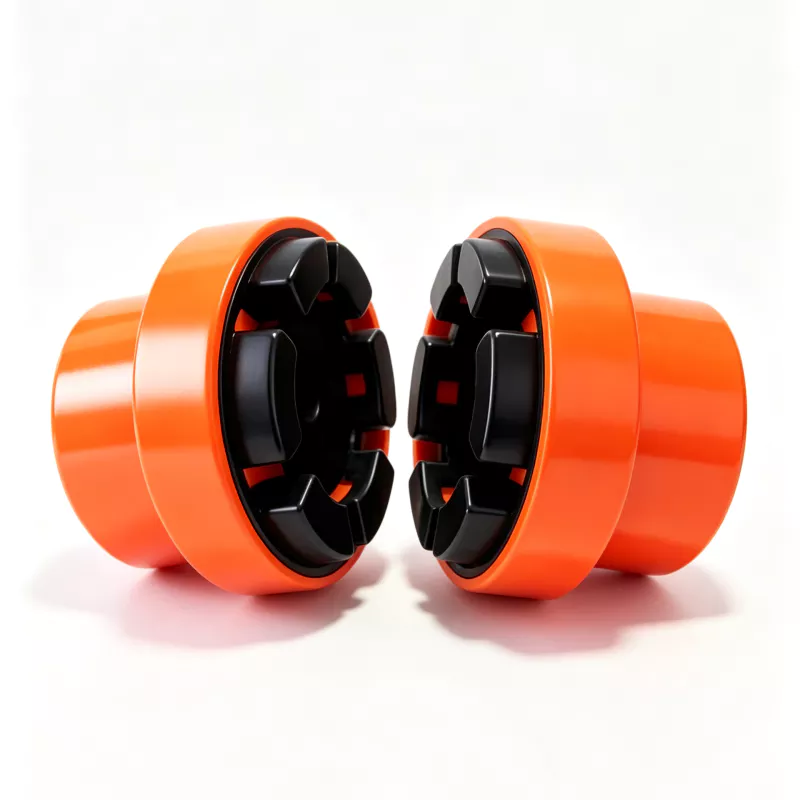
Das Aussehen des Produkts variiert je nach Kupplungsgröße und Bohrungsbearbeitung. Verwenden Sie die untenstehende Modelltabelle für die Abmessungen und senden Sie uns die Details beider Wellen zur Bearbeitung.
NM194 Flexible Kupplung
Die NM194 bietet ein Nenndrehmoment von 840 Nm, eine Bohrungskapazität bis zu 85 mm und eine Nenndrehzahlbegrenzung von 1500 U/min. Sie eignet sich für Pumpen, Kompressoren und Prozessanlagen mit höherem Drehmoment, sofern Drehmoment, Wellenpassung, Ausrichtung und Bauraum innerhalb der Modellgrenzen liegen.
Technische Daten NM194
Der NM194 gehört mit einem Nenndrehmoment von 840 Nm und einer maximalen Bohrung von 85 mm zum oberen Ende der NM-Reihe. Im Gegensatz zum NM168 liegt seine Nenndrehzahlgrenze bei 1500 U/min, weshalb die Drehzahl ein entscheidendes Auswahlkriterium und nicht nur ein sekundärer Wert in der Tabelle ist.
| Modell | Nenndrehmoment | Geschwindigkeitsbegrenzung | D | D1 | d max | L | S | Radial | Angular |
|---|---|---|---|---|---|---|---|---|---|
| NM194 | 840 Nm | 1500 U/min | 194 mm | 140 mm | 85 mm | 100 mm | 3.5 +/- 1.5 mm | 0.10 mm | 2.0 Grad |
Die Werte für D, D1, dmax, L, S und den Radius werden in Millimetern angegeben. Die Winkelverschiebung wird in Grad dargestellt. Auf kleineren Bildschirmen ziehen Sie die Tabelle horizontal, um alle Spalten anzuzeigen.
Pass- und Bearbeitungsprüfungen
Diese Kupplung hat einen Außendurchmesser von 194 mm und eine Länge von 100 mm. Achten Sie auf ausreichend Platz für den Drehraum, die Schutzvorrichtungen und den Wartungszugang und stellen Sie sicher, dass die Wellenschultern die erforderliche Nabenposition nicht beeinträchtigen.
Wo diese Größe passt
NM194 kann für Pumpen mit höherem Drehmoment, Kompressorhilfsaggregate und Prozessanlagen, die innerhalb der Drehzahlgrenze von 1500 U/min betrieben werden, geprüft werden. Bitte geben Sie Informationen zum Anlaufverfahren, zu Laständerungen und Stoßbelastungen an, da die hohe Nennleistung eine Überprüfung der Betriebsdauer nicht ersetzt.
Ausrichtung und Montage
Der vorgegebene S-Wert beträgt 3,5 ± 1,5 mm. Die radiale Fehlausrichtung ist auf 0,10 mm und die Winkelfehlausrichtung auf 2,0 Grad begrenzt. Eine schwere Maschinenanlage sollte erst ausgerichtet werden, nachdem Rohrleitungen, Schutzvorrichtungen und andere angeschlossene Lasten ihre endgültige Position erreicht haben.
Bereiten Sie die NM194-Angebotsanfrage vor.
Bei NM194 geben Sie bitte als Erstes die genaue Drehzahl an, falls die Maschine nahe 1500 U/min läuft. Fügen Sie anschließend die Anzahl der Bohrungen und Keilnuten, das Auslegungsdrehmoment, die angetriebenen Maschinen, die Stückzahl und alle in der Zeichnung festgelegten Bearbeitungsanforderungen hinzu.
Material- und Betriebsbedingungen
Das Standardmaterial für den Ring ist NBR. Falls die Anlage Hitze, Öl, Chemikalien oder eine bestimmte Elastomerhärte aufweist, berücksichtigen Sie diese Bedingungen, damit das angebotene Element den Anforderungen entspricht.
Vergleichen Sie die nächstliegenden NM-Größen.
Reichen 840 Nm oder 85 mm Bohrungsdurchmesser nicht aus, ist NM214 die nächstgrößere Variante und behält die Drehzahlklasse von 1500 U/min bei. Läuft die Maschine mit über 1500 U/min, sollte man die Auswahlkriterien erneut prüfen, anstatt einfach die größere Größe zu wählen.