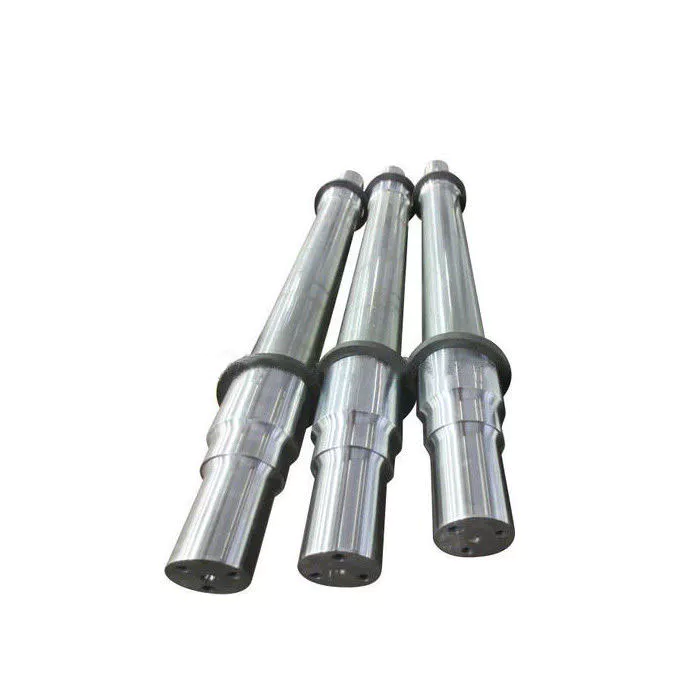
China PP Female End with Latch Guillimin Coupling Composition Hose Fitting Hose Coupling coupling beam

Solution Description

PP Female stop with Latch guillimin coupling composition hose fitting hose coupling 

The standard of Guillemin Coupling is EN14420-8 or NF E29572. Components are largely stainless steel, aluminum, polypropylene and brass. Guillemin hose couplings is related with thread and locking ring (latch). It can be utilised with DIN2817 security clamp. Doing work force is ten bar. Guillemin coupling is broadly employed in industries of oil, chemical, fire safety, paper manufacture, development and metallurgy.

Guillemin coupling Kind: Cap with Latch
Regular: EN14420-8/NF E29572
Material:

  1. Stainless Metal
  2. Aluminum
  3. Polypropylene
  4. Brass

Dimensions: 1″ – 4″ (DN25 – DN100)
doing work strain:10 bar
Application: it is commonly employed in oil, chemical market, fireplace combating, paper manufacture, constructoin and metallurgy

Our Benefit

We are experienced as we have been in this industry as a manufacturer for much more than ten several years. Each of good quality and services are hugely guaranteed. Totally prompt shipping. We can produce in accordance to distinct drawings from customers. Welcome OEM/ODM undertaking. Strict manage on top quality. Large efficient and effectively skilled sale support crew.  ISO9001, CE and SGS certified.

FAQ

one.Q: Are you a producer or investing company?
A: We are an skilled manufacturer. We very own production line and types of devices.
 
2. Can you make our specific logo on the portion?
Indeed please provide me your brand and we will make your emblem on the portion.

three. Can you manufacture goods according to my drawings?
Yes we can company in accordance to client’s drawings if drawings or samples are offered. We are knowledgeable adequate to make new instruments.

4. Q: Can I get some samples?
A: We are honored to supply you our samples. Normally it is for totally free like 3-5 pcs. It is billed if the samples are far more than 5 pcs. Clients bear the freight price.

5. Q: How a lot of days do you need to finish an get?
A: Generally it will take about 30 times to complete the get. It takes much more time close to CZPT season, or if the buy requires a lot of sorts of distinct merchandise.  

six. what kind of rubber washer do you utilize to camlock couplings?
Typically we use NBR gasket.

speak to-details.html

US $3
/ Piece
|
50 Pieces

(Min. Order)

###

Standard: En14420-8/NF E29572
Material: Aluiminium, Stainless Steel, PP, Brass
Connection: Latch, Female, Male, Thread
Surface Treatment: Sandcasting Surface
Head Type: Round
Transport Package: Plastic Bag, Normal Export Carton and Pallet

###

Samples:
US$ 3/Piece
1 Piece(Min.Order)

|
Request Sample

###

Customization:
US $3
/ Piece
|
50 Pieces

(Min. Order)

###

Standard: En14420-8/NF E29572
Material: Aluiminium, Stainless Steel, PP, Brass
Connection: Latch, Female, Male, Thread
Surface Treatment: Sandcasting Surface
Head Type: Round
Transport Package: Plastic Bag, Normal Export Carton and Pallet

###

Samples:
US$ 3/Piece
1 Piece(Min.Order)

|
Request Sample

###

Customization:

Programming With Couplings

A coupling is a mechanical device that connects two shafts together and transmits power. Its purpose is to join rotating equipment and allows some degree of end-movement or misalignment. There are many different types of couplings. It’s important to choose the right one for your application.
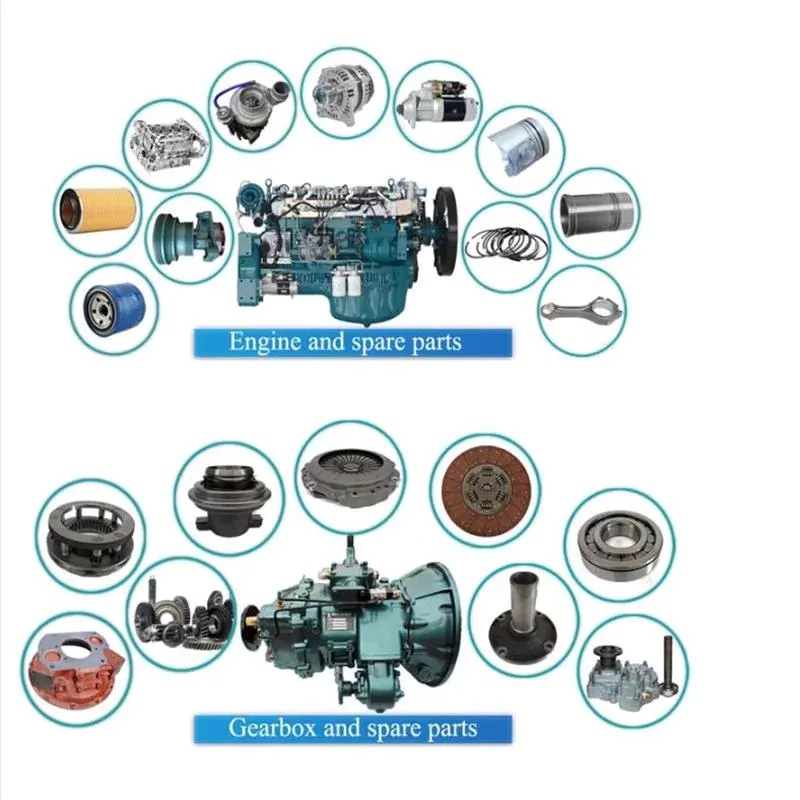
gearbox

Mechanical connection between two shafts

There are many ways to achieve mechanical connection between two shafts, including the use of a coupling. One common type is the beam coupling, which is also known as a helical coupling. It is used for transmission of torque between two shafts. This type of connection accommodates axial, parallel and angular misalignments.
The hubs and shafts of a worm gear are connected together by a coupling. This mechanical connection allows one shaft to turn another without causing a mechanical failure. This type of coupling is made from sliding or rubbing parts to transfer torque. However, the coupling is not designed to withstand jerks, so it isn’t suitable for high-speed applications.
The use of a coupling is common in machinery and equipment. It helps transmit power from one drive shaft to the other, while adding mechanical flexibility. It is also useful for reducing the impact and vibration caused by misalignment. It also protects the drive shaft components from wear and tear.
A double-hook coupling can be used to provide a uniform angular velocity at the driven shaft. Another example is a double-jointed coupling. A double-jointed coupling can be used to connect shafts that are not directly intersecting. The double-jointed yoke can be used for the same purpose.
A shaft coupling is a device that maintains a strong mechanical connection between two shafts. It transfers motion from one shaft to another, at all loads and misalignments. Unlike a conventional linkage, a shaft coupling isn’t designed to allow relative motion between the two shafts. Couplings often serve several purposes in a machine, but their primary use is torque and power transmission.

Functions that control the flow of another function

One of the simplest programming constructs is a function that controls the flow of another function. A function can take an argument and return a different value, but it must be ready to return before it can pass that value to another function. To do this, you can use the goto statement and the if statement. Another way to control flow is to use a conditional statement.
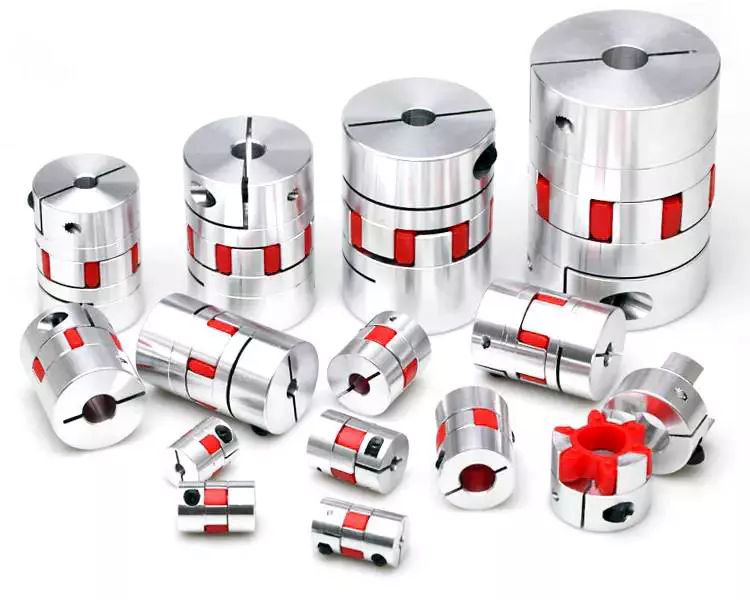
gearbox

Criteria for selecting a coupling

There are several important factors to consider when choosing the right coupling. One of the most important factors is coupling stiffness, which depends on the material used and the shape. The stiffness of a coupling determines its ability to resist elastic deformation. A stiff coupling is desirable for certain types of applications, but it’s undesirable for others. Stiffness can reduce the performance of a system if there’s too much inertia. To avoid this, ensure that the coupling you choose is within the recommended limits.
The size of a coupling is also important. Different coupling types can accommodate different shaft sizes and shapes. Some couplings have special features, such as braking and shear pin protection. When choosing a coupling, you should also consider the type of driven equipment. If you need to connect a high-torque motor, for example, you’ll want to choose a gear coupling. Likewise, a high-speed machine may require a disc coupling.
Another factor to consider when selecting a coupling is the torque rating. Despite its importance, it’s often underestimated. The torque rating is defined as the torque of the coupling divided by its OD. In some cases, torque may fluctuate during a cycle, requiring a coupling with a higher torque rating.
Torsionally flexible couplings are also important to consider. Their design should be able to withstand the torque required during operation, as well as the required speed. The coupling should also have a high degree of torsional stiffness, as well as damping. Furthermore, a damping coupling can reduce the energy wasted through vibration.
The sizing of a coupling is also determined by the torque. Many engineers use torque to select the correct coupling size, but they also take into consideration torsional flexibility and torsional stiffness. For example, a shaft may be able to handle large torque without damaging the coupling, while a disk may be unable to handle large amounts of torque.
Besides torque, another important consideration in coupling selection is the cost. While a coupling may be cheaper, it may be less reliable or easier to maintain. Couplings that are difficult to service may not last as long. They may also require frequent maintenance. If that’s the case, consider purchasing a coupling with a low service factor.
There are many different types of couplings. Some require additional lubrication throughout their lifetime, while others are 100% lubrication-free. An example of a 100% lubrication-free coupling is the RBI flexible coupling from CZPT. This type of coupling can significantly reduce your total cost of ownership.
In addition to the above-mentioned benefits, elastomeric couplings are low-cost and need little maintenance. While they are often cheaper than metallic couplings, they also have excellent shock absorption and vibration dampening properties. However, they are susceptible to high temperatures. Also, they are difficult to balance as an assembly, and have limited overload torque capacity.


China PP Female End with Latch Guillimin Coupling Composition Hose Fitting Hose Coupling     coupling beamChina PP Female End with Latch Guillimin Coupling Composition Hose Fitting Hose Coupling     coupling beam
editor by czh 2022-11-27
China Pump Motor Connector Disc Pack Steel Flexible Shaft Elastic Flex Lamina Film Disc Couplings edc coupling

Item Description

FAQ
Q 1: Are you buying and selling firm or producer?
A: We are a specialist company specializing in producing
numerous series of couplings.

Q 2:Can you do OEM?
Indeed, we can. We can do OEM & ODM for all the consumers with custom-made artworks of PDF or AI structure.

Q 3:How extended is your supply time?
Usually it is 20-30 times if the merchandise are not in inventory. It is according to amount.

Q 4: Do you supply samples ? Is it free or extra ?
Yes, we could provide the sample but not for free.Really we have a very very good price basic principle, when you make the bulk buy then price of sample will be deducted.

Q 5: How long is your guarantee?
A: Our Guarantee is 12 month below regular circumstance.

Q 6: What is the MOQ?
A:Typically our MOQ is 1pcs.

Q 7: Do you have inspection techniques for coupling ?
A:a hundred% self-inspection just before packing.

Q 8: Can I have a check out to your manufacturing facility prior to the get?
A: Positive,welcome to check out our factory.

Q 9: What is actually your payment?
A:1) T/T. 2) L/C 
 

US $10-850
/ Piece
|
1 Piece

(Min. Order)

###

Standard Or Nonstandard: Standard
Shaft Hole: 92mm
Torque: 63n.M
Bore Diameter: 20-38mm
Speed: 9300r.Min-1
Structure: Flexible

###

Customization:
US $10-850
/ Piece
|
1 Piece

(Min. Order)

###

Standard Or Nonstandard: Standard
Shaft Hole: 92mm
Torque: 63n.M
Bore Diameter: 20-38mm
Speed: 9300r.Min-1
Structure: Flexible

###

Customization:

What Is a Coupling?

A coupling is a device used to connect two shafts. It transmits power between them and allows for some misalignment or end movement. There are several types of couplings. The most common ones are gear couplings and planetary couplings. However, there are many others as well.

Transfer of energy

Energy coupling is a process by which two biological reactions are linked by sharing energy. The energy released during one reaction can be used to drive the second. It is a very useful mechanism that synchronizes two biological systems. All cells have two types of reactions, exergonic and endergonic, and they are connected through energy coupling.
This process is important for a number of reasons. The first is that it allows the exchange of electrons and their energy. In a single molecule, this energy transfer involves the exchange of two electrons of different energy and spin. This exchange occurs because of the overlap interaction of two MOs.
Secondly, it is possible to achieve quadratic coupling. This is a phenomenon that occurs in circular membrane resonators when the system is statically deflected. This phenomenon has been gaining a great deal of interest as a mechanism for stronger coupling. If this mechanism is employed in a physical system, energy can be transferred on a nanometer scale.
The magnetic field is another important factor that affects the exchange of energy between semiconductor QWs. A strong magnetic field controls the strength of the coupling and the energy order of the exciton. The magnetic field can also influence the direction of polariton-mediated energy transfer. This mechanism is very promising for controlling the routing of excitation in a semiconductor.
gearbox

Functions

Couplings play a variety of functions, including transferring power, compensating for misalignment, and absorbing shock. These functions depend on the type of shaft being coupled. There are four basic types: angular, parallel, and symmetrical. In many cases, coupling is necessary to accommodate misalignment.
Couplings are mechanical devices that join two rotating pieces of equipment. They are used to transfer power and allow for a small degree of end-to-end misalignment. This allows them to be used in many different applications, such as the transmission from the gearbox to the differential in an automobile. In addition, couplings can be used to transfer power to spindles.

Types

There are two main types of couplings: rigid and flexible. Rigid couplings are designed to prevent relative motion between the two shafts and are suitable for applications where precise alignment is required. However, high stresses in the case of significant misalignment can cause early failure of the coupling. Flexible couplings, on the other hand, allow for misalignment and allow for torque transmission.
A software application may exhibit different types of coupling. The first type involves the use of data. This means that one module may use data from another module for its operation. A good example of data coupling is the inheritance of an object. In a software application, one module can use another module’s data and parameters.
Another type of coupling is a rigid sleeve coupling. This type of coupling has a pipe with a bore that is finished to a specified tolerance. The pipe contains two threaded holes for transmitting torque. The sleeve is secured by a gib head key. This type of coupling may be used in applications where a couple of shafts are close together.
Other types of coupling include common and external. Common coupling occurs when two modules share global data and communication protocols. This type of coupling can lead to uncontrollable error propagation and unforeseen side effects when changes are made to the system. External coupling, on the other hand, involves two modules sharing an external device interface or communication protocol. Both types of coupling involve a shared code structure and depend on the external modules or hardware.
Mechanical couplings are essential in power transmission. They connect rotating shafts and can either be rigid or flexible, depending on the accuracy required. These couplings are used in pumps, compressors, motors, and generators to transmit power and torque. In addition to transferring power, couplings can also prevent torque overload.
gearbox

Applications

Different coupling styles are ideal for different applications, and they have different characteristics that influence the coupling’s reliability during operation. These characteristics include stiffness, misalignment capability, ease of installation and maintenance, inherent balance, and speed capability. Selecting the right coupling style for a particular application is essential to minimize performance problems and maximize utility.
It is important to know the requirements for the coupling you choose before you start shopping. A proper selection process takes into account several design criteria, including torque and rpm, acoustic signals, and environmental factors. Once you’ve identified these parameters, you can select the best coupling for the job.
A gear coupling provides a mechanical connection between two rotating shafts. These couplings use gear mesh to transmit torque and power between two shafts. They’re typically used on large industrial machines, but they can also be used in smaller motion control systems. In smaller systems, a zero-backlash coupling design is ideal.
Another type of coupling is the flange coupling. These are easy to manufacture. Their design is similar to a sleeve coupling. But unlike a sleeve coupling, a flange coupling features a keyway on one side and two threaded holes on the other. These couplings are used in medium-duty industrial applications.
Besides being useful for power transmission, couplings can also prevent machine vibration. If vibration occurs in a machine, it can cause it to deviate from its predetermined position, or damage the motor. Couplings, however, help prevent this by absorbing the vibration and shock and preventing damage to expensive parts.
Couplings are heavily used in the industrial machinery and electrical industries. They provide the necessary rotation mechanism required by machinery and other equipment. Coupling suppliers can help customers find the right coupling for a specific application.
gearbox

Criteria for selecting a coupling

When selecting a coupling for a specific application, there are a number of different factors to consider. These factors vary greatly, as do operating conditions, so selecting the best coupling for your system can be challenging. Some of these factors include horsepower, torque, and speed. You also need to consider the size of the shafts and the geometry of the equipment. Space restrictions and maintenance and installation requirements should also be taken into account. Other considerations can be specific to your system, such as the need for reversing.
First, determine what size coupling you need. The coupling’s size should be able to handle the torque required by the application. In addition, determine the interface connection, such as straight or tapered keyed shafts. Some couplings also feature integral flange connections.
During the specification process, be sure to specify which materials the coupling will be made of. This is important because the material will dictate most of its performance characteristics. Most couplings are made of stainless steel or aluminum, but you can also find ones made of Delrin, titanium, or other engineering-grade materials.
One of the most important factors to consider when selecting a coupling is its torque capability. If the torque rating is not adequate, the coupling can be damaged or break easily. Torque is a major factor in coupling selection, but it is often underestimated. In order to ensure maximum coupling performance, you should also take into consideration the size of the shafts and hubs.
In some cases, a coupling will need lubrication throughout its lifecycle. It may need to be lubricated every six months or even once a year. But there are couplings available that require no lubrication at all. An RBI flexible coupling by CZPT is one such example. Using a coupling of this kind can immediately cut down your total cost of ownership.
China Pump Motor Connector Disc Pack Steel Flexible Shaft Elastic Flex Lamina Film Disc Couplings     edc couplingChina Pump Motor Connector Disc Pack Steel Flexible Shaft Elastic Flex Lamina Film Disc Couplings     edc coupling
editor by czh 2022-11-26

China Best Coupling Manufacturer for PU Flexible Coupling coupling and cohesion

Solution Description

Merchandise description 

Materials

 Materials for silicon,fluorine,NBR,FPM,EPDM,SILCONE ACM,HNBR
Inspection Equipments  Excellent chemical and actual physical residence, exceptional oil- resistance, high temperature steadiness, and so forth.
Tolerance  +/-.05mm
Drawing Format  PDF/DWG/DXF/IGS/Stage,and many others
Application subject  Parts are used on vehicles, printing devices, foods processing devices, textile equipment, digital devices, and so on.
Production  process  CNC machining Broaching, Drilling, Milling, Other Machining Services, Fast Prototyping, Turning,
Condition  As for each your drawing Or your sample
Shade service   Customization
QC inspection

 Make confident 100% inspection just before the supply

Advantages Routine maintenance,acturally HRC coupling isn’t going to need to have servicing.
Environmental, elastic elements make HRC coupling applies to a assortment of functioning circumstances.

Trustworthy transmission, in scenario of elastic component is ruined, the pet phase wichcasted siamesedly even now preserve the transmission processing reliably.

Economic, HRC couplings have presently been created of optimization style,which make transmission electricity match the transmission shaft diameter.

Good restoration capability, elastic components can decrease the load at the CZPT moments, and the deviation is a key thought when planning.

Adaptability of misalignment, HRC can coupling contains parallel shift, angle change and axis change which happen some moments.

Application and examination

Our warehouse

Custom rubber areas

Custom plastic areas

Packing & Delivery

Packaging Information: plastic bag packing within, carton packing exterior, or custom-made packing.
Port:Xihu (West Lake) Dis.g port, ZheJiang town.
Lead Time :

Amount(Parts) one – one thousand 1001 – 10000 10001 – 50000 >50000    
Est. Time(days) 5 12 eighteen To be negotiated  


Place purchase steps

Our Services:

1. Convenient: 24th Hours revenue/After-revenue Provider on the internet or on the mobile phone.

two. Quality Assurance: We will examine with you and offer you the very best top quality relaxed to your industry.

three. Rapid shipping: Time is funds, we guarantee we often will supply the merchandise more quickly than other folks.

four. According to customers’ drawing,personalized technical specs are welcomed.

5. Tiny orders can be accepted.

Packing

Company Profile

SHEN ZHOU CZPT RUBBER & PLASTIC CO.,LTD was launched in 2000. The manufacturing facility situated in industrial zone of HangZhou town, ZheJiang province, china.

We have Plastic injection molding workshop and rubber compression molding workshops.Our main items contains Bakelit Knobs,Pull Manage,rubber doorway stops, doorway guard, roller, rubber bumpers, Rubber grommets, vibration dampers, seals, plastic corner, injection plastic brackets, injection plastic shell.to undertake different varieties of rubber molding and plastic injection elements, customize according to drawing and samples. 

The goods have been exported to The us, Europe, Oceania, Middle East, Southeast Asia and other regions and nations, and hope to create more enterprise Cooperation with new consumer from all more than the globe.

FAQ

Q1: Are you a maker or a investing business?

A1: We are the original producer of custom made rubber elements and customized plastic areas.

Q2: Exactly where is your company situated?

A2: Our business is located in HangZhou Metropolis, ZheJiang Province, China.

Q3: Could I get free samples?

A3: We could provide tiny samples for free, but air freight or sea freight should be borne by buyer side.

This fall: What must I give in buy to get an offer?

A4: Customers are needed to offer material, interior diameter, outer diameter, cross segment length and amount.

Q5: How is the merchandise packed by your manufacturing facility?

A5: The merchandise are normally packed by plastic bags, carton packing containers with pallets or picket containers.

Q6: What are the incoterms used?

A6: The incoterms utilized are FOB, CIF and CFR.

Q7: What are the payment terms acknowledged?

A7: We accept Alibaba Trade Assurance, T/T, L/C and West Union.

Q8: What about the shipping time?

A8: The products are generally dellivered to customer aspect inside of 7-thirty times primarily based upon the method of transportation needed.


Shipping Cost:

Estimated freight per unit.


To be negotiated

###

Standard Or Nonstandard: Customized
Shaft Hole: Customized
Torque: Customized

###

Samples:
US$ 0.01/Piece
1 Piece(Min.Order)

|

Order Sample

###

Customization:

###

Material

 Materials for silicon,fluorine,NBR,FPM,EPDM,SILCONE ACM,HNBR
Inspection Equipments  Excellent chemical and physical property, excellent oil- resistance, high temperature stability, etc.
Tolerance  +/-0.05mm
Drawing Format  PDF/DWG/DXF/IGS/STEP,etc
Application field  Parts are used on vehicles, printing machines, food processing machines, textile machines, electronic machines, etc.
Manufacturing  process  CNC machining Broaching, Drilling, Milling, Other Machining Services, Rapid Prototyping, Turning,
Shape  As per your drawing Or your sample
Color service   Customization
QC inspection

 Make sure 100% inspection before the delivery

###

Advantages Maintenance,acturally HRC coupling doesn’t need maintenance.
Environmental, elastic components make HRC coupling applies to a variety of working conditions.

Reliable transmission, in case of elastic component is damaged, the dog segment wichcasted siamesedly still keep the transmission processing reliably.

Economic, HRC couplings have already been made of optimization design,which make transmission power match the transmission shaft diameter.

Good recovery capacity, elastic components can reduce the load at the peak moments, and the deviation is a major consideration when designing.

Adaptability of misalignment, HRC can coupling contains parallel shift, angle shift and axis shift which happen some times.

###

Quantity(Pieces) 1 – 1000 1001 – 10000 10001 – 50000 >50000    
Est. Time(days) 5 12 18 To be negotiated  
Shipping Cost:

Estimated freight per unit.


To be negotiated

###

Standard Or Nonstandard: Customized
Shaft Hole: Customized
Torque: Customized

###

Samples:
US$ 0.01/Piece
1 Piece(Min.Order)

|

Order Sample

###

Customization:

###

Material

 Materials for silicon,fluorine,NBR,FPM,EPDM,SILCONE ACM,HNBR
Inspection Equipments  Excellent chemical and physical property, excellent oil- resistance, high temperature stability, etc.
Tolerance  +/-0.05mm
Drawing Format  PDF/DWG/DXF/IGS/STEP,etc
Application field  Parts are used on vehicles, printing machines, food processing machines, textile machines, electronic machines, etc.
Manufacturing  process  CNC machining Broaching, Drilling, Milling, Other Machining Services, Rapid Prototyping, Turning,
Shape  As per your drawing Or your sample
Color service   Customization
QC inspection

 Make sure 100% inspection before the delivery

###

Advantages Maintenance,acturally HRC coupling doesn’t need maintenance.
Environmental, elastic components make HRC coupling applies to a variety of working conditions.

Reliable transmission, in case of elastic component is damaged, the dog segment wichcasted siamesedly still keep the transmission processing reliably.

Economic, HRC couplings have already been made of optimization design,which make transmission power match the transmission shaft diameter.

Good recovery capacity, elastic components can reduce the load at the peak moments, and the deviation is a major consideration when designing.

Adaptability of misalignment, HRC can coupling contains parallel shift, angle shift and axis shift which happen some times.

###

Quantity(Pieces) 1 – 1000 1001 – 10000 10001 – 50000 >50000    
Est. Time(days) 5 12 18 To be negotiated  

Types of Couplings

A coupling is a device that connects two shafts and transmits power from one to the other. Its main purpose is to join two pieces of rotating equipment. It also allows for some degree of misalignment or end movement. Here are a few examples of coupling types: Beam coupling, Flexible coupling, Magnetic coupling, and Shaft coupling.
gearbox

Beam coupling

Beam couplings are used to couple motors and other devices. They are available in several types, including flexible, slit, and rigid beam couplings. Each has unique properties and characteristics. These couplings are best for applications requiring a high level of precision and long life. They are also a practical solution for the connection of stepping and servo motors with screw rods.
Beam couplings are usually made of stainless steel or aluminum alloy, and feature spiral and parallel cut designs. Multiple cuts allow the coupling to accommodate multiple beams and improve angular and parallel misalignment tolerances. Additionally, beam couplings are comparatively cheaper than other types of rotary joints, and they require minimal maintenance.
The materials of a beam coupling should be considered early in the specification process. They are typically made of aluminum or stainless steel, but they can also be manufactured from Delrin, titanium, and other engineering grade materials. Beam couplings are often available in multiple sizes to fit specific shaft diameters.
Beam couplings are a key component of motion control systems. They provide excellent characteristics when used properly, and they are a popular choice for many applications. A thorough understanding of each type of coupling will help to prevent coupling failure and enhance system performance. Therefore, it is important to choose the right coupling for your application.
Various types of beam couplings have unique advantages and disadvantages. The FCR/FSR design has two sets of three beams. It is available in both metric and inch shaft sizes. The FCR/FSR couplings are ideal for light-duty power transmission applications. A metric shaft is more suitable for these applications, while an inch shaft is preferred for heavier duty applications.
Two types of beam couplings are available from Ruland. The Ruland Flexible beam coupling has a multi-helical cut design that offers a greater flexibility than commodity beam couplings. This design allows for higher torque capabilities while minimizing wind-up. In addition, it is also more durable than its commodity counterparts.

Flexible coupling

A flexible coupling is a versatile mechanical connection that allows for the easy coupling of two moving parts. The design of these couplings allows for a variety of stiffness levels and can address a variety of problems, such as torsional vibrations or critical speed. However, there are a number of tradeoffs associated with flexible couplings.
One of the biggest issues is the installation of the coupling, which requires stretching. This problem can be exacerbated by cold temperatures. In such a case, it is vital to install the coupling properly. Using a gear clamp is one of the most important steps in a successful installation. A gear clamp will keep the coupling in place and prevent it from leaking.
Another common type of flexible coupling is the gear coupling. These couplings are composed of two hubs with crowned external gear teeth that mesh with two internally splined flanged sleeves. The massive size of the teeth makes them resemble gears. Gear couplings offer good torque characteristics but require periodic lubrication. These couplings can also be expensive and have a limited number of applications.
Another type of flexible coupling is the SDP/SI helical coupling. These couplings can accommodate axial motion, angular misalignment, and parallel offset. This design incorporates a spiral pattern that makes them flexible. These couplings are available in stainless steel and aluminum.
A flexible coupling has a wide range of applications. Generally, it is used to connect two rotating pieces of equipment. Depending on its design, it can be used to join two pieces of machinery that move in different directions. This type of coupling is a type of elastomeric coupling, which has elastic properties.
There are many types of flexible couplings available for different types of applications. The purpose of a flexible coupling is to transmit rotational power from one shaft to another. It is also useful for transmitting torque. However, it is important to note that not all flexible couplings are created equally. Make sure to use a reputable brand for your coupling needs. It will ensure a reliable connection.
The simplest and most commonly used type of flexible coupling is the grid coupling. This type of coupling uses two hubs with slotted surfaces. The steel grid is allowed to slide along these slots, which gives it the ability to flex. The only limitation of this type of coupling is that it can only tolerate a 1/3 degree misalignment. It can transmit torques up to 3,656 Nm.
gearbox

Magnetic coupling

Magnetic coupling is a technique used to transfer torque from one shaft to another using a magnetic field. It is the most common type of coupling used in machinery. It is highly effective when transferring torque from a rotating motor to a rotating shaft. Magnetic couplings can handle high torques and high speeds.
Magnetic coupling is described by the energy difference between a high-spin state and a broken symmetry state, with the former being the energy of a true singlet state. In single-determinant theories, this energy difference is called the Kij. Usually, the broken-symmetry state is a state with two interacting local high-spin centers.
The magnetic coupling device is regarded as a qualitative leap in the reaction still industry. It has solved a number of problems that had plagued the industry, including flammability, explosiveness, and leakage. Magnetic couplings are a great solution for many applications. The chemical and pharmaceutical industries use them for various processes, including reaction stills.
Magnetic couplings are a good choice for harsh environments and for tight spaces. Their enclosed design keeps them fluid and dust-proof. They are also corrosion-resistant. In addition, magnetic couplings are more affordable than mechanical couplings, especially in areas where access is restricted. They are also popular for testing and temporary installations.
Another use for magnetic coupling is in touch screens. While touch screens use capacitive and resistive elements, magnetic coupling has found a cool new application in wireless charging. While the finger tracking on touch screens may seem like a boley job, the process is very sensitive. The devices that use wireless charging need to have very large coils that are locked into resonant magnetic coupling.
Magnetic couplings also help reduce hydraulic horsepower. They cushion starts and reduce alignment problems. They can also improve flow in oversized pumps. A magnetic coupling with an 8 percent air gap can reduce hydraulic HP by approximately 27 percent. In addition, they can be used in aggressive environments. They also help reduce repair costs.
Magnetic couplings are a great choice for pumps and propeller systems because they have the added advantage of being watertight and preventing shaft failure. These systems also have the benefit of not requiring rotating seals.
gearbox

Shaft coupling

A shaft coupling joins two shafts and transmits rotational motion. Generally, shaft couplings allow for some degree of misalignment, but there are also torque limiters. Selecting the right coupling can save you time and money and prevent equipment downtime. Here are the main features to consider when purchasing a coupling for your application.
Shaft couplings should be easy to install and disassemble, transmit full power to the mated shaft, and reduce shock loads. A shaft coupling that does not have projecting parts should be used for machines that move or rotate at high speeds. Some types of shaft couplings are flexible while others are rigid.
Shaft couplings can be used in a variety of applications, including piping systems. They can be used to connect shafts that are misaligned and help maintain alignment. They can also be used for vibration dampening. Shaft couplings also allow shafts to be disconnected when necessary.
Shaft couplings can accommodate a certain amount of backlash, but this backlash must be well within the tolerance set by the system. Extremely high backlash can break the coupling and cause excessive wear and stress. In addition, excessive backlash can lead to erratic alignment readings. To avoid these issues, operators must reduce backlash to less than 2deg.
Shaft couplings are often referred to by different names. Some are referred to as “sliced” couplings while others are known as “slit” couplings. Both types offer high torque and torsional stiffness. These couplings are typically made from metals with various alloys, such as acetal, stainless steel, or titanium.
CZPT Pulley produces shaft couplings for a variety of applications. These products are used in high-power transmission systems. They have several advantages over friction couplings. In addition to minimizing wear, they don’t require lubrication. They are also capable of transmitting high torque and high speeds.
Another type of shaft coupling is the universal coupling. It is used to transmit power to multiple machines with different spindles. Its keyed receiving side and flanges allow it to transmit power from one machine to another.
China Best Coupling Manufacturer for PU Flexible Coupling     coupling and cohesionChina Best Coupling Manufacturer for PU Flexible Coupling     coupling and cohesion
editor by czh 2022-11-25

China Hot selling Cast iron HRC70 HRC90 HRC110 HRC130 high torque water pump flexible shaft coupling hydraulic quick release spider jaw coupling coupling alignment

Guarantee: not available
Relevant Industries: Equipment Mend Retailers
Personalized assist: OEM
Construction: Jaw / Spider
Flexible or Rigid: Adaptable
Regular or Nonstandard: Common
Content: Forged Iron/Steel
Product Identify: HRC Coupling
Area Treatment method: Black Oxide,Phosphated
Bore sort: Straight Bore and Taper Bore
Certification: ISO 9 Fax:86~/8822 0571 -86755074 Wechat:Net:

Applications of Spline Couplings

A spline coupling is a highly effective means of connecting two or more components. These types of couplings are very efficient, as they combine linear motion with rotation, and their efficiency makes them a desirable choice in numerous applications. Read on to learn more about the main characteristics and applications of spline couplings. You will also be able to determine the predicted operation and wear. You can easily design your own couplings by following the steps outlined below.
splineshaft

Optimal design

The spline coupling plays an important role in transmitting torque. It consists of a hub and a shaft with splines that are in surface contact without relative motion. Because they are connected, their angular velocity is the same. The splines can be designed with any profile that minimizes friction. Because they are in contact with each other, the load is not evenly distributed, concentrating on a small area, which can deform the hub surface.
Optimal spline coupling design takes into account several factors, including weight, material characteristics, and performance requirements. In the aeronautics industry, weight is an important design factor. S.A.E. and ANSI tables do not account for weight when calculating the performance requirements of spline couplings. Another critical factor is space. Spline couplings may need to fit in tight spaces, or they may be subject to other configuration constraints.
Optimal design of spline couplers may be characterized by an odd number of teeth. However, this is not always the case. If the external spline’s outer diameter exceeds a certain threshold, the optimal spline coupling model may not be an optimal choice for this application. To optimize a spline coupling for a specific application, the user may need to consider the sizing method that is most appropriate for their application.
Once a design is generated, the next step is to test the resulting spline coupling. The system must check for any design constraints and validate that it can be produced using modern manufacturing techniques. The resulting spline coupling model is then exported to an optimisation tool for further analysis. The method enables a designer to easily manipulate the design of a spline coupling and reduce its weight.
The spline coupling model 20 includes the major structural features of a spline coupling. A product model software program 10 stores default values for each of the spline coupling’s specifications. The resulting spline model is then calculated in accordance with the algorithm used in the present invention. The software allows the designer to enter the spline coupling’s radii, thickness, and orientation.
splineshaft

Characteristics

An important aspect of aero-engine splines is the load distribution among the teeth. The researchers have performed experimental tests and have analyzed the effect of lubrication conditions on the coupling behavior. Then, they devised a theoretical model using a Ruiz parameter to simulate the actual working conditions of spline couplings. This model explains the wear damage caused by the spline couplings by considering the influence of friction, misalignment, and other conditions that are relevant to the splines’ performance.
In order to design a spline coupling, the user first inputs the design criteria for sizing load carrying sections, including the external spline 40 of the spline coupling model 30. Then, the user specifies torque margin performance requirement specifications, such as the yield limit, plastic buckling, and creep buckling. The software program then automatically calculates the size and configuration of the load carrying sections and the shaft. These specifications are then entered into the model software program 10 as specification values.
Various spline coupling configuration specifications are input on the GUI screen 80. The software program 10 then generates a spline coupling model by storing default values for the various specifications. The user then can manipulate the spline coupling model by modifying its various specifications. The final result will be a computer-aided design that enables designers to optimize spline couplings based on their performance and design specifications.
The spline coupling model software program continually evaluates the validity of spline coupling models for a particular application. For example, if a user enters a data value signal corresponding to a parameter signal, the software compares the value of the signal entered to the corresponding value in the knowledge base. If the values are outside the specifications, a warning message is displayed. Once this comparison is completed, the spline coupling model software program outputs a report with the results.
Various spline coupling design factors include weight, material properties, and performance requirements. Weight is one of the most important design factors, particularly in the aeronautics field. ANSI and S.A.E. tables do not consider these factors when calculating the load characteristics of spline couplings. Other design requirements may also restrict the configuration of a spline coupling.

Applications

Spline couplings are a type of mechanical joint that connects two rotating shafts. Its two parts engage teeth that transfer load. Although splines are commonly over-dimensioned, they are still prone to fatigue and static behavior. These properties also make them prone to wear and tear. Therefore, proper design and selection are vital to minimize wear and tear on splines. There are many applications of spline couplings.
A key design is based on the size of the shaft being joined. This allows for the proper spacing of the keys. A novel method of hobbing allows for the formation of tapered bases without interference, and the root of the keys is concentric with the axis. These features enable for high production rates. Various applications of spline couplings can be found in various industries. To learn more, read on.
FE based methodology can predict the wear rate of spline couplings by including the evolution of the coefficient of friction. This method can predict fretting wear from simple round-on-flat geometry, and has been calibrated with experimental data. The predicted wear rate is reasonable compared to the experimental data. Friction evolution in spline couplings depends on the spline geometry. It is also crucial to consider the lubrication condition of the splines.
Using a spline coupling reduces backlash and ensures proper alignment of mated components. The shaft’s splined tooth form transfers rotation from the splined shaft to the internal splined member, which may be a gear or other rotary device. A spline coupling’s root strength and torque requirements determine the type of spline coupling that should be used.
The spline root is usually flat and has a crown on one side. The crowned spline has a symmetrical crown at the centerline of the face-width of the spline. As the spline length decreases toward the ends, the teeth are becoming thinner. The tooth diameter is measured in pitch. This means that the male spline has a flat root and a crowned spline.
splineshaft

Predictability

Spindle couplings are used in rotating machinery to connect two shafts. They are composed of two parts with teeth that engage each other and transfer load. Spline couplings are commonly over-dimensioned and are prone to static and fatigue behavior. Wear phenomena are also a common problem with splines. To address these issues, it is essential to understand the behavior and predictability of these couplings.
Dynamic behavior of spline-rotor couplings is often unclear, particularly if the system is not integrated with the rotor. For example, when a misalignment is not present, the main response frequency is one X-rotating speed. As the misalignment increases, the system starts to vibrate in complex ways. Furthermore, as the shaft orbits depart from the origin, the magnitudes of all the frequencies increase. Thus, research results are useful in determining proper design and troubleshooting of rotor systems.
The model of misaligned spline couplings can be obtained by analyzing the stress-compression relationships between two spline pairs. The meshing force model of splines is a function of the system mass, transmitting torque, and dynamic vibration displacement. This model holds when the dynamic vibration displacement is small. Besides, the CZPT stepping integration method is stable and has high efficiency.
The slip distributions are a function of the state of lubrication, coefficient of friction, and loading cycles. The predicted wear depths are well within the range of measured values. These predictions are based on the slip distributions. The methodology predicts increased wear under lightly lubricated conditions, but not under added lubrication. The lubrication condition and coefficient of friction are the key factors determining the wear behavior of splines.

China Hot selling Cast iron HRC70 HRC90 HRC110 HRC130 high torque water pump flexible shaft coupling hydraulic quick release spider jaw coupling     coupling alignment

China Hot selling 90 brass socket male female adapter dme water pressure type fluid coupling

Tailored help: OEM
Design Quantity: Z80
Technics: Forged
Link: Woman
Shape: Equivalent
Head Code: Hexagon
Identify: swift coupling
Software: h2o cooling line
Coloration: Organic Color
Usage: – 15 bar
Check of brass fitting:: one hundred% Leakage Check
Manufacturing unit service: precision cnc machining provider, OEM
Price tag: manufacturing unit price tag
Measurement: female to male
Item title: Tube Connector
Medium: Acid
Packaging Specifics: Plastic bags or cartons

TitleFast coupling
Content H59 brass
Temperature Range-20°C to max. +160°C
Planning TechniqueCNC lathe processed
Leading Time five-fifteen functioning days
Packing WayPlastic bags or cartons
Major time for SAMPLEInside of 7 doing work days
ShadeNormal Colour
Utilization – fifteen bar
Sizeone/2” 3/8” 1/4′ ect customized
one. Who are we?We are based in ZheJiang , hydraulic force P Collection Planetary Gearbox Planetary ninety Diploma Equipment Box Gearbox For Hyndai Dump Truck Marine Transmission Gea China, begin from 2571,offer to Domestic Marketplace(30.00%),North The usa(twenty five.00%),Jap Europe(fifteen.00%),Southeast Asia(10.00%),Western Europe(ten.00%),Southern Europe(10.00%). There are complete about eleven-fifty men and women in our workplace. two. How can we guarantee good quality?Usually a pre-generation sample prior to mass productionAlways final Inspection before shipment. three.What can you acquire from us?Swift Coupling, IEC flange gearbox and motor mixture Aluminum worm equipment sets Male Nipple,Brass Plug,Quick Launch Coupling,Brass fitting, brass nipple etc… 4.Why should you buy from us not from other suppliers?HangZhou CZPT CZPT Fitting Co., Ltd is positioned in Chang’an, HangZhou, was recognized in 2571 , Industrial Equipment box for crane and hoisiting VF sequence small worm generate gearbox more than ten a long time.CZPT is 1 of the skilled manufacture of plastic mildew and Die-Casting mold accessories and machinery parts, We have improvement processing equipment and seasoned technological innovation. five.What providers can we offer?Approved Shipping Terms: FOB,EXW,Express Delivery;Accepted Payment Forex:USD,EURAccepted Payment Variety: T/T,Western UnionLanguage Spoken:English, Industrial Mechanical Hoisting Gear Drives Gearbox Pace Increaser Reducer Chinese six.How long is your supply time?Normally within 7-ten working days . But the actual delivery time may possibly be depend on diverse amount. 7.Do you provide samples ? Is it cost-free or additional ?Yes, we are honored to supply you free of charge samples for high quality inspection,but do not spend the price of freight.

Worm Gear Motors

Worm gear motors are often preferred for quieter operation because of the smooth sliding motion of the worm shaft. Unlike gear motors with teeth, which may click as the worm turns, worm gear motors can be installed in a quiet area. In this article, we will talk about the CZPT whirling process and the various types of worms available. We’ll also discuss the benefits of worm gear motors and worm wheel.
worm shaft

worm gear

In the case of a worm gear, the axial pitch of the ring pinion of the corresponding revolving worm is equal to the circular pitch of the mating revolving pinion of the worm gear. A worm with one start is known as a worm with a lead. This leads to a smaller worm wheel. Worms can work in tight spaces because of their small profile.
Generally, a worm gear has high efficiency, but there are a few disadvantages. Worm gears are not recommended for high-heat applications because of their high level of rubbing. A full-fluid lubricant film and the low wear level of the gear reduce friction and wear. Worm gears also have a lower wear rate than a standard gear. The worm shaft and worm gear is also more efficient than a standard gear.
The worm gear shaft is cradled within a self-aligning bearing block that is attached to the gearbox casing. The eccentric housing has radial bearings on both ends, enabling it to engage with the worm gear wheel. The drive is transferred to the worm gear shaft through bevel gears 13A, one fixed at the ends of the worm gear shaft and the other in the center of the cross-shaft.

worm wheel

In a worm gearbox, the pinion or worm gear is centered between a geared cylinder and a worm shaft. The worm gear shaft is supported at either end by a radial thrust bearing. A gearbox’s cross-shaft is fixed to a suitable drive means and pivotally attached to the worm wheel. The input drive is transferred to the worm gear shaft 10 through bevel gears 13A, one of which is fixed to the end of the worm gear shaft and the other at the centre of the cross-shaft.
Worms and worm wheels are available in several materials. The worm wheel is made of bronze alloy, aluminum, or steel. Aluminum bronze worm wheels are a good choice for high-speed applications. Cast iron worm wheels are cheap and suitable for light loads. MC nylon worm wheels are highly wear-resistant and machinable. Aluminum bronze worm wheels are available and are good for applications with severe wear conditions.
When designing a worm wheel, it is vital to determine the correct lubricant for the worm shaft and a corresponding worm wheel. A suitable lubricant should have a kinematic viscosity of 300 mm2/s and be used for worm wheel sleeve bearings. The worm wheel and worm shaft should be properly lubricated to ensure their longevity.

Multi-start worms

A multi-start worm gear screw jack combines the benefits of multiple starts with linear output speeds. The multi-start worm shaft reduces the effects of single start worms and large ratio gears. Both types of worm gears have a reversible worm that can be reversed or stopped by hand, depending on the application. The worm gear’s self-locking ability depends on the lead angle, pressure angle, and friction coefficient.
A single-start worm has a single thread running the length of its shaft. The worm advances one tooth per revolution. A multi-start worm has multiple threads in each of its threads. The gear reduction on a multi-start worm is equal to the number of teeth on the gear minus the number of starts on the worm shaft. In general, a multi-start worm has two or three threads.
Worm gears can be quieter than other types of gears because the worm shaft glides rather than clicking. This makes them an excellent choice for applications where noise is a concern. Worm gears can be made of softer material, making them more noise-tolerant. In addition, they can withstand shock loads. Compared to gears with toothed teeth, worm gears have a lower noise and vibration rate.
worm shaft

CZPT whirling process

The CZPT whirling process for worm shafts raises the bar for precision gear machining in small to medium production volumes. The CZPT whirling process reduces thread rolling, increases worm quality, and offers reduced cycle times. The CZPT LWN-90 whirling machine features a steel bed, programmable force tailstock, and five-axis interpolation for increased accuracy and quality.
Its 4,000-rpm, 5-kW whirling spindle produces worms and various types of screws. Its outer diameters are up to 2.5 inches, while its length is up to 20 inches. Its dry-cutting process uses a vortex tube to deliver chilled compressed air to the cutting point. Oil is also added to the mixture. The worm shafts produced are free of undercuts, reducing the amount of machining required.
Induction hardening is a process that takes advantage of the whirling process. The induction hardening process utilizes alternating current (AC) to cause eddy currents in metallic objects. The higher the frequency, the higher the surface temperature. The electrical frequency is monitored through sensors to prevent overheating. Induction heating is programmable so that only certain parts of the worm shaft will harden.

Common tangent at an arbitrary point on both surfaces of the worm wheel

A worm gear consists of two helical segments with a helix angle equal to 90 degrees. This shape allows the worm to rotate with more than one tooth per rotation. A worm’s helix angle is usually close to 90 degrees and the body length is fairly long in the axial direction. A worm gear with a lead angle g has similar properties as a screw gear with a helix angle of 90 degrees.
The axial cross section of a worm gear is not conventionally trapezoidal. Instead, the linear part of the oblique side is replaced by cycloid curves. These curves have a common tangent near the pitch line. The worm wheel is then formed by gear cutting, resulting in a gear with two meshing surfaces. This worm gear can rotate at high speeds and still operate quietly.
A worm wheel with a cycloid pitch is a more efficient worm gear. It reduces friction between the worm and the gear, resulting in greater durability, improved operating efficiency, and reduced noise. This pitch line also helps the worm wheel engage more evenly and smoothly. Moreover, it prevents interference with their appearance. It also makes worm wheel and gear engagement smoother.
worm shaft

Calculation of worm shaft deflection

There are several methods for calculating worm shaft deflection, and each method has its own set of disadvantages. These commonly used methods provide good approximations but are inadequate for determining the actual worm shaft deflection. For example, these methods do not account for the geometric modifications to the worm, such as its helical winding of teeth. Furthermore, they overestimate the stiffening effect of the gearing. Hence, efficient thin worm shaft designs require other approaches.
Fortunately, several methods exist to determine the maximum worm shaft deflection. These methods use the finite element method, and include boundary conditions and parameter calculations. Here, we look at a couple of methods. The first method, DIN 3996, calculates the maximum worm shaft deflection based on the test results, while the second one, AGMA 6022, uses the root diameter of the worm as the equivalent bending diameter.
The second method focuses on the basic parameters of worm gearing. We’ll take a closer look at each. We’ll examine worm gearing teeth and the geometric factors that influence them. Commonly, the range of worm gearing teeth is one to four, but it can be as large as twelve. Choosing the teeth should depend on optimization requirements, including efficiency and weight. For example, if a worm gearing needs to be smaller than the previous model, then a small number of teeth will suffice.

China Hot selling 90 brass socket male female adapter dme water pressure type     fluid coupling

China Professional Plastic Type One Touch Quick CZPT Black Color Push with Great quality

Error:获取返回内容失败,
Your session has expired. Please reauthenticate.

How to Replace the Drive Shaft

Several different functions in a vehicle are critical to its functioning, but the driveshaft is probably the part that needs to be understood the most. A damaged or damaged driveshaft can damage many other auto parts. This article will explain how this component works and some of the signs that it may need repair. This article is for the average person who wants to fix their car on their own but may not be familiar with mechanical repairs or even driveshaft mechanics. You can click the link below for more information.
air-compressor

Repair damaged driveshafts

If you own a car, you should know that the driveshaft is an integral part of the vehicle’s driveline. They ensure efficient transmission of power from the engine to the wheels and drive. However, if your driveshaft is damaged or cracked, your vehicle will not function properly. To keep your car safe and running at peak efficiency, you should have it repaired as soon as possible. Here are some simple steps to replace the drive shaft.
First, diagnose the cause of the drive shaft damage. If your car is making unusual noises, the driveshaft may be damaged. This is because worn bushings and bearings support the drive shaft. Therefore, the rotation of the drive shaft is affected. The noise will be squeaks, dings or rattles. Once the problem has been diagnosed, it is time to repair the damaged drive shaft.
Professionals can repair your driveshaft at relatively low cost. Costs vary depending on the type of drive shaft and its condition. Axle repairs can range from $300 to $1,000. Labor is usually only around $200. A simple repair can cost between $150 and $1700. You’ll save hundreds of dollars if you’re able to fix the problem yourself. You may need to spend a few more hours educating yourself about the problem before handing it over to a professional for proper diagnosis and repair.
The cost of repairing a damaged driveshaft varies by model and manufacturer. It can cost as much as $2,000 depending on parts and labor. While labor costs can vary, parts and labor are typically around $70. On average, a damaged driveshaft repair costs between $400 and $600. However, these parts can be more expensive than that. If you don’t want to spend money on unnecessarily expensive repairs, you may need to pay a little more.
air-compressor

Learn how drive shafts work

While a car engine may be one of the most complex components in your vehicle, the driveshaft has an equally important job. The driveshaft transmits the power of the engine to the wheels, turning the wheels and making the vehicle move. Driveshaft torque refers to the force associated with rotational motion. Drive shafts must be able to withstand extreme conditions or they may break. Driveshafts are not designed to bend, so understanding how they work is critical to the proper functioning of the vehicle.
The drive shaft includes many components. The CV connector is one of them. This is the last stop before the wheels spin. CV joints are also known as “doughnut” joints. The CV joint helps balance the load on the driveshaft, the final stop between the engine and the final drive assembly. Finally, the axle is a single rotating shaft that transmits power from the final drive assembly to the wheels.
Different types of drive shafts have different numbers of joints. They transmit torque from the engine to the wheels and must accommodate differences in length and angle. The drive shaft of a front-wheel drive vehicle usually includes a connecting shaft, an inner constant velocity joint and an outer fixed joint. They also have anti-lock system rings and torsional dampers to help them run smoothly. This guide will help you understand the basics of driveshafts and keep your car in good shape.
The CV joint is the heart of the driveshaft, it enables the wheels of the car to move at a constant speed. The connector also helps transmit power efficiently. You can learn more about CV joint driveshafts by looking at the top 3 driveshaft questions
The U-joint on the intermediate shaft may be worn or damaged. Small deviations in these joints can cause slight vibrations and wobble. Over time, these vibrations can wear out drivetrain components, including U-joints and differential seals. Additional wear on the center support bearing is also expected. If your driveshaft is leaking oil, the next step is to check your transmission.
The drive shaft is an important part of the car. They transmit power from the engine to the transmission. They also connect the axles and CV joints. When these components are in good condition, they transmit power to the wheels. If you find them loose or stuck, it can cause the vehicle to bounce. To ensure proper torque transfer, your car needs to stay on the road. While rough roads are normal, bumps and bumps are common.
air-compressor

Common signs of damaged driveshafts

If your vehicle vibrates heavily underneath, you may be dealing with a faulty propshaft. This issue limits your overall control of the vehicle and cannot be ignored. If you hear this noise frequently, the problem may be the cause and should be diagnosed as soon as possible. Here are some common symptoms of a damaged driveshaft. If you experience this noise while driving, you should have your vehicle inspected by a mechanic.
A clanging sound can also be one of the signs of a damaged driveshaft. A ding may be a sign of a faulty U-joint or center bearing. This can also be a symptom of worn center bearings. To keep your vehicle safe and functioning properly, it is best to have your driveshaft inspected by a certified mechanic. This can prevent serious damage to your car.
A worn drive shaft can cause difficulty turning, which can be a major safety issue. Fortunately, there are many ways to tell if your driveshaft needs service. The first thing you can do is check the u-joint itself. If it moves too much or too little in any direction, it probably means your driveshaft is faulty. Also, rust on the bearing cap seals may indicate a faulty drive shaft.
The next time your car rattles, it might be time for a mechanic to check it out. Whether your vehicle has a manual or automatic transmission, the driveshaft plays an important role in your vehicle’s performance. When one or both driveshafts fail, it can make the vehicle unsafe or impossible to drive. Therefore, you should have your car inspected by a mechanic as soon as possible to prevent further problems.
Your vehicle should also be regularly lubricated with grease and chain to prevent corrosion. This will prevent grease from escaping and causing dirt and grease to build up. Another common sign is a dirty driveshaft. Make sure your phone is free of debris and in good condition. Finally, make sure the driveshaft chain and cover are in place. In most cases, if you notice any of these common symptoms, your vehicle’s driveshaft should be replaced.
Other signs of a damaged driveshaft include uneven wheel rotation, difficulty turning the car, and increased drag when trying to turn. A worn U-joint also inhibits the ability of the steering wheel to turn, making it more difficult to turn. Another sign of a faulty driveshaft is the shuddering noise the car makes when accelerating. Vehicles with damaged driveshafts should be inspected as soon as possible to avoid costly repairs.

China supplier Anodize Per Mil-a-8625, Type Iib, Class 2 CNC Machining Parts, Brackets, Housings, Bellows and Machine Covers, Couplings, Mounts, Collars near me manufacturer

Item Description


CNC Precision Machining/Milling/Grilling/Turning/Cutting/Stamping Aluminum Extrusion Metal Sheet Works Finishing CNC Machines Design & Engineering Svcs.
Aluminum alloy T slots Extrusions Stamping Anodizing&Hard Anodizing Multi-axis tapping  Free samples
Stainless steel Aluminum Machining Bending Deburring & Polishing   Prototype
Carbon steel Aluminum Fabrication Laser cutting Plating   AutoCAD/3D drawings
Titanium alloy    Welding Powder Coating   Laser logo 
Copper   Deep Drawn Shells Brazing    
Plastic   Metal Fabrication Passivating    
Tiny&Medium&Large parts     Heat Treating    
CNC Precision Machining/Milling/Grilling/Turning/Cutting/Stamping Aluminum Extrusion Metal Sheet Works Finishing CNC Machines Design & Engineering Svcs.
Aluminum alloy T slots Extrusions Stamping Anodizing&Hard Anodizing Multi-axis tapping  Free samples
Stainless steel Aluminum Machining Bending Deburring & Polishing   Prototype
Carbon steel Aluminum Fabrication Laser cutting Plating   AutoCAD/3D drawings
Titanium alloy    Welding Powder Coating   Laser logo 
Copper   Deep Drawn Shells Brazing    
Plastic   Metal Fabrication Passivating    
Tiny&Medium&Large parts     Heat Treating    

The Different Types of Splines in a Splined Shaft

A splined shaft is a machine component with internal and external splines. The splines are formed in four different ways: Involute, Parallel, Serrated, and Ball. You can learn more about each type of spline in this article. When choosing a splined shaft, be sure to choose the right one for your application. Read on to learn about the different types of splines and how they affect the shaft’s performance.
splineshaft

Involute splines

Involute splines in a splined shaft are used to secure and extend mechanical assemblies. They are smooth, inwardly curving grooves that resist separation during operation. A shaft with involute splines is often longer than the shaft itself. This feature allows for more axial movement. This is beneficial for many applications, especially in a gearbox.
The involute spline is a shaped spline, similar to a parallel spline. It is angled and consists of teeth that create a spiral pattern that enables linear and rotatory motion. It is distinguished from other splines by the serrations on its flanks. It also has a flat top. It is a good option for couplers and other applications where angular movement is necessary.
Involute splines are also called involute teeth because of their shape. They are flat on the top and curved on the sides. These teeth can be either internal or external. As a result, involute splines provide greater surface contact, which helps reduce stress and fatigue. Regardless of the shape, involute splines are generally easy to machine and fit.
Involute splines are a type of splines that are used in splined shafts. These splines have different names, depending on their diameters. An example set of designations is for a 32-tooth male spline, a 2,500-tooth module, and a 30 degree pressure angle. An example of a female spline, a fillet root spline, is used to describe the diameter of the splined shaft.
The effective tooth thickness of splines is dependent on the number of keyways and the type of spline. Involute splines in splined shafts should be designed to engage 25 to 50 percent of the spline teeth during the coupling. Involute splines should be able to withstand the load without cracking.

Parallel splines

Parallel splines are formed on a splined shaft by putting one or more teeth into another. The male spline is positioned at the center of the female spline. The teeth of the male spline are also parallel to the shaft axis, but a common misalignment causes the splines to roll and tilt. This is common in many industrial applications, and there are a number of ways to improve the performance of splines.
Typically, parallel splines are used to reduce friction in a rotating part. The splines on a splined shaft are narrower on the end face than the interior, which makes them more prone to wear. This type of spline is used in a variety of industries, such as machinery, and it also allows for greater efficiency when transmitting torque.
Involute splines on a splined shaft are the most common. They have equally spaced teeth, and are therefore less likely to crack due to fatigue. They also tend to be easy to cut and fit. However, they are not the best type of spline. It is important to understand the difference between parallel and involute splines before deciding on which spline to use.
The difference between splined and involute splines is the size of the grooves. Involute splines are generally larger than parallel splines. These types of splines provide more torque to the gear teeth and reduce stress during operation. They are also more durable and have a longer life span. And because they are used on farm machinery, they are essential in this type of application.
splineshaft

Serrated splines

A Serrated Splined Shaft has several advantages. This type of shaft is highly adjustable. Its large number of teeth allows large torques, and its shorter tooth width allows for greater adjustment. These features make this type of shaft an ideal choice for applications where accuracy is critical. Listed below are some of the benefits of this type of shaft. These benefits are just a few of the advantages. Learn more about this type of shaft.
The process of hobbing is inexpensive and highly accurate. It is useful for external spline shafts, but is not suitable for internal splines. This type of process forms synchronized shapes on the shaft, reducing the manufacturing cycle and stabilizing the relative phase between spline and thread. It uses a grinding wheel to shape the shaft. CZPT Manufacturing has a large inventory of Serrated Splined Shafts.
The teeth of a Serrated Splined Shaft are designed to engage with the hub over the entire circumference of the shaft. The teeth of the shaft are spaced uniformly around the spline, creating a multiple-tooth point of contact over the entire length of the shaft. The results of these analyses are usually satisfactory. But there are some limitations. To begin with, the splines of the Serrated Splined Shaft should be chosen carefully. If the application requires large-scale analysis, it may be necessary to modify the design.
The splines of the Serrated Splined Shaft are also used for other purposes. They can be used to transmit torque to another device. They also act as an anti-rotational device and function as a linear guide. Both the design and the type of splines determine the function of the Splined Shaft. In the automobile industry, they are used in vehicles, aerospace, earth-moving machinery, and many other industries.

Ball splines

The invention relates to a ball-spinned shaft. The shaft comprises a plurality of balls that are arranged in a series and are operatively coupled to a load path section. The balls are capable of rolling endlessly along the path. This invention also relates to a ball bearing. Here, a ball bearing is one of the many types of gears. The following discussion describes the features of a ball bearing.
A ball-splined shaft assembly comprises a shaft with at least one ball-spline groove and a plurality of circumferential step grooves. The shaft is held in a first holding means that extends longitudinally and is rotatably held by a second holding means. Both the shaft and the first holding means are driven relative to one another by a first driving means. It is possible to manufacture a ball-splined shaft in a variety of ways.
A ball-splined shaft features a nut with recirculating balls. The ball-splined nut rides in these grooves to provide linear motion while preventing rotation. A splined shaft with a nut that has recirculating balls can also provide rotary motion. A ball splined shaft also has higher load capacities than a ball bushing. For these reasons, ball splines are an excellent choice for many applications.
In this invention, a pair of ball-spinned shafts are housed in a box under a carrier device 40. Each of the two shafts extends along a longitudinal line of arm 50. One end of each shaft is supported rotatably by a slide block 56. The slide block also has a support arm 58 that supports the center arm 50 in a cantilever fashion.
splineshaft

Sector no-go gage

A no-go gauge is a tool that checks the splined shaft for oversize. It is an effective way to determine the oversize condition of a splined shaft without removing the shaft. It measures external splines and serrations. The no-go gage is available in sizes ranging from 19mm to 130mm with a 25mm profile length.
The sector no-go gage has two groups of diametrally opposed teeth. The space between them is manufactured to a maximum space width and the tooth thickness must be within a predetermined tolerance. This gage would be out of tolerance if the splines were measured with a pin. The dimensions of this splined shaft can be found in the respective ANSI or DIN standards.
The go-no-go gage is useful for final inspection of thread pitch diameter. It is also useful for splined shafts and threaded nuts. The thread of a screw must match the contour of the go-no-go gage head to avoid a no-go condition. There is no substitute for a quality machine. It is an essential tool for any splined shaft and fastener manufacturer.
The NO-GO gage can detect changes in tooth thickness. It can be calibrated under ISO17025 standards and has many advantages over a non-go gage. It also gives a visual reference of the thickness of a splined shaft. When the teeth match, the shaft is considered ready for installation. It is a critical process. In some cases, it is impossible to determine the precise length of the shaft spline.
The 45-degree pressure angle is most commonly used for axles and torque-delivering members. This pressure angle is the most economical in terms of tool life, but the splines will not roll neatly like a 30 degree angle. The 45-degree spline is more likely to fall off larger than the other two. Oftentimes, it will also have a crowned look. The 37.5 degree pressure angle is a compromise between the other two pressure angles. It is often used when the splined shaft material is harder than usual.

China factory Sanitary Quick Loading Rubber Coated Hose CZPT wholesaler

Merchandise Description

Sanitary Rapid Loading Rubber Coated Hose coupling

Style Principle:
Versatile steel hose made from stainless steel sheet, is a annularly corrugated tube created by constantly processing this materials in a high speed automatic forming machine. The exterior braid is not only extra to the hose for mechanical defense, but it is a essential component and noticeably will increase the strain ranking of the hose assembly by restraining the force force.

Benefits:
– it is highly resistant to lower or substantial temperatures ,
-resistant to corrosion
-it absorbs vibrations and noise, connects misaligned rigid piping. 

Features:

one) Inside: SS304 Bellows or SS316L bellows
2) Exterior: Single braid nets

3) Assembly:As per client requirements
four) Size: As for each customer’s need
five) Link stop:  NPT or BSP threadd, quick disconnect cam or groove join, or floating flanges, and special union relationship as for each requirements 

six) Working Stress: 190psi, dependent on dimension

seven) Working temperature: -two hundred ~ 400

Software:
Utilized in aerospace, petroleum, metallurgy, chemical sector, building and shipping and delivery, ECT purposes. 


ABOUT OUR Company
 

OUR Generation Ability

OUR Inventory

OUR INSPECTION

OUR PACKAGING

OUR EXHIBITION

FAQ:
one.   Are you a trading company or factory?    
We are a manufacturer factory and we also have our own exporting license.
two.   Do you have certificate ?   
Yes,  ISO, Fda, LFGB, CE, PED certificate . We also have some patents in design and style. 
three.   How do you control the quality? 
     In quality control ,the most important is to avoid material mixing . 
     In our manufacturing unit , 3 spectro PMI devices are used in uncooked substance warehouse, manufacturing plant, dispatch plant.     
     Force inspecting machine, PMI equipment, RA roughness spector, hardness screening machine…..  all machines help in inspection.
     2 staff inspect in the course of generation in various sections
     5 workers examine the finished productions to keep away from shortage, poor quality, mixing chemical….     
4.  If there is any quality problem, how do you solve it? 
We are very proud that we never make one customer leave us. We are not 100% perfect, there is some quality problem. 
Normally alternative, or payment, or resend goods to buyers as per the condition. To be mentioned as for every condition. 
five.   How long is your delivery time?   
For normal products in 7-10 days for bulk order, in 15-25 days. It depends.
six.   Warranty time?
     3 years warranty for all of our stainless steel products. Gaskets or the straightforward damaged areas are not included due to the different application for customers. 
7. Why have faith in in us ?
     14 years in this business . It tends to make us professional .Excellent credit rating in this marketplace.
     All of our machines are the assurance of our responsibility.    
eight. Totally free sample ?
Free of charge samples can be supplied for initial cooperation under sincere  cooperation.
9. What is the MOQ? 
1pcs MOQ is welcome for starting cooperatoon
10.Material certificate ?
Material certificaite, mill certificate, strain tests certification, roughness certification, measure certificate, RT certificate,…   can be obtainable, you should declare when inquiry us.
eleven.    More questions are appreciated. 
  

nominal pressure(PN Mpa) Nominal diameter(D N mm) Product number Threaded connection size      The minimum bending radius   Test pressure Burst pressure Delivery length
screw thread M six parties
S
static
Rj
dynamic
Rd
Ps Mpa Pb Mpa L mm
       High pressure 35 4 JR4BL1 M12*1.25 17 ≥10DN ≥2RJ 1.5PN 3PN 150~1700
23 6 JR6BL1 M14*1.5
8 JR8BL1 M16*1.5 19
10 JR10BL1 M20*1.5 24 150~1600
12 JR12BL1 M22*1.5 27
21 15 JR14BL1 M24*1.5
16 18 JR18BL1 M30*1.5 36 160~1600
20 JR20BL1
     medium-pressure 10 4 JR4L3 M12*1.25 17 4PN 150~1700
6 JR6L3 M14*1.5
8 JR8L3 M16*1.5 19 150~1600
10 JR10L3 M20*1.5 24
8 12 JR12L3 M22*1.5 27
15 JR14L3 M24*1.5
18 JR18L3 M30*1.5 36 160~1600
6.4 20 JR20L3
25 JR25L3 M36*1.5 41 180~1600
4 32 JR32L3 M45*1.5 50 300~1600
        low pressure 2.5 4 JR4L1 M12*1.25 17 150~1700
6 JR6L1 M14*1.5
8 JR8L1 M16*1.5 19 150~1600
10 JR10L1 M20*1.5 24
1.6 12 JR12L1 M22*1.5 27
15 JR14L1 M24*1.5 160~1600
18 JR18L1 M30*1.5 36
20 JR20L1 180~1600
1 25 JR25L1 M36*1.5 41
32 JR32L1 M45*1.5 50 300~1600


###

JoNeng valves company was started in 2007. Located in the stainless steel industry zone, Wenzhou, China.
Totally 130nos of workers and the factory Covers 5000m2. Till now, we have 34 sets of LG Mazak machines and other local CNC machines; Plus, we have 2 sets of automatic machining unit.
To assure better quality, we have the full inspecting quality control equipment: 1nos Ra roughness instrument, 3nos stainless steel spectrometer, numbers of roundness instrument, numbers of thickness instrument, numbers of radius instrument, 3 nos pressure testing center.
JoNeng valves provides the following sanitary flow control components:
Stainless steel sanitary valve ( stainless steel sanitary butterfly valve, sanitary diaphragm valve, sanitary check valve, sanitary ball valve, sanitary CPM valve, …)
stainless steel sanitary pipe fittings( stainless steel sanitary elbow, tee, clamp, ferrule, union, cleaning ball, sight glass, filter…)
Stainless steel Sanitary pump ( stainless steel sanitary centrifugal pump, rotary lobe pump, CIP pump)
JoNeng services for food, beverage, dairy, chemical, bioth, pharmaceutical, and etc industries.
 
JoNeng customers are from 55 different countries.After so many years, JoNeng know more about different requirements from different countries’ customers.
JoNeng valves believes in "What we say, what we do". We always believe honesty and responsibility is the only way leading to long term business relationship. Trying our best for customers and put ourselves into customers’ shoes.
Our commitment " Never let customers leave us because our poor quality".
Making business with us, making friends with us.

###

Production Lines Stainless steel sanitary pipe fittings’ line, machining line, sanitary manhole line, 
Product Range sanitary butterfly Valve, sanitary diaphragm valve, sanitary pipe fittings, union, ferrule, sight glass, manhole cover, safety valve, sampling valve….
Year Established 2007
Factory Size in Square Meters 5000M2
NO. OF TOTAL STAFF 130
Production Capital 8 000 000 USD
Detail capacity Manhole covers 12000nos
  Pipe fittings 150000nos
  Ferrules, unions, connectors 200000nos
  Diaphragm valves 15000nos
  Butterfly valves 20000nos
Investment in Manufacturing Equipment 750000usd
Details of equipment For machining parts
29 nos of LG Mazak CNC Machines
4 nos of local CNC machines
2 nos of automatic CNC center
12 nos of plain lathe
 
For pipe fittings
4 nos of press
3 nos of cutting machine
3 nos of chamfering machine
 
We also have the following quipments
4 nos of polishing machine
12 nos of grinding machine
3 nos of laser marking machine
3 nos of pressure testing machine
1 nos of temperature testing machine
3 nos of spectro instrument
1 nos of surface roughness device
Primary Competitive Advantages Strict inspection , honest business way, fast revert on order problem
Stocked materials Big quantity for raw forging of butterfly valve, diaphragm valve, ferrule, union, adapters, pipe fittings, clamps, sight glass, safety valve, manhole cover,
OEM Services Provided yes
Design Service Offered yes
Sales Volume 6 000 000 usd
Export Percentage 80%
MAIN MARKET USA, Germany, Hungary, Canada, Thailand, Holland, England, South Africa,Indonesia, Saudi, India, New Zealand, Australia, Middle East
Own Brand Name JoNeng

###

HOW DO WE MAKE THE QUALITY CONTROL
For
Raw Materials
1.  Material control from raw materials. For raw material checking, we check 100% by chemical liquid. Any property      mistakes would be rejected.
2. Sand hole inspection after raw materials are machining before polishing.
3. Carbon component report can be provided if needed
4. Mechanics test report can be provided if needed
 
For New products 5. 2nos of new samples to be checked against technical drawing. Testing report is provided to customers before bulk production.
 
For finished materials 6. For valves, pressure testing and temperature testing is required for each valve.
7. After we get the finished products, we check for surface roughness, thickness equality, roundness, size measurement and sand holes again.
8. For all finished products, the checking quantity is not less than 10% of total quantity.
9. Before shipment, we check for the quantity of each product in order to find out any missing quantity or wrong product.
nominal pressure(PN Mpa) Nominal diameter(D N mm) Product number Threaded connection size      The minimum bending radius   Test pressure Burst pressure Delivery length
screw thread M six parties
S
static
Rj
dynamic
Rd
Ps Mpa Pb Mpa L mm
       High pressure 35 4 JR4BL1 M12*1.25 17 ≥10DN ≥2RJ 1.5PN 3PN 150~1700
23 6 JR6BL1 M14*1.5
8 JR8BL1 M16*1.5 19
10 JR10BL1 M20*1.5 24 150~1600
12 JR12BL1 M22*1.5 27
21 15 JR14BL1 M24*1.5
16 18 JR18BL1 M30*1.5 36 160~1600
20 JR20BL1
     medium-pressure 10 4 JR4L3 M12*1.25 17 4PN 150~1700
6 JR6L3 M14*1.5
8 JR8L3 M16*1.5 19 150~1600
10 JR10L3 M20*1.5 24
8 12 JR12L3 M22*1.5 27
15 JR14L3 M24*1.5
18 JR18L3 M30*1.5 36 160~1600
6.4 20 JR20L3
25 JR25L3 M36*1.5 41 180~1600
4 32 JR32L3 M45*1.5 50 300~1600
        low pressure 2.5 4 JR4L1 M12*1.25 17 150~1700
6 JR6L1 M14*1.5
8 JR8L1 M16*1.5 19 150~1600
10 JR10L1 M20*1.5 24
1.6 12 JR12L1 M22*1.5 27
15 JR14L1 M24*1.5 160~1600
18 JR18L1 M30*1.5 36
20 JR20L1 180~1600
1 25 JR25L1 M36*1.5 41
32 JR32L1 M45*1.5 50 300~1600


###

JoNeng valves company was started in 2007. Located in the stainless steel industry zone, Wenzhou, China.
Totally 130nos of workers and the factory Covers 5000m2. Till now, we have 34 sets of LG Mazak machines and other local CNC machines; Plus, we have 2 sets of automatic machining unit.
To assure better quality, we have the full inspecting quality control equipment: 1nos Ra roughness instrument, 3nos stainless steel spectrometer, numbers of roundness instrument, numbers of thickness instrument, numbers of radius instrument, 3 nos pressure testing center.
JoNeng valves provides the following sanitary flow control components:
Stainless steel sanitary valve ( stainless steel sanitary butterfly valve, sanitary diaphragm valve, sanitary check valve, sanitary ball valve, sanitary CPM valve, …)
stainless steel sanitary pipe fittings( stainless steel sanitary elbow, tee, clamp, ferrule, union, cleaning ball, sight glass, filter…)
Stainless steel Sanitary pump ( stainless steel sanitary centrifugal pump, rotary lobe pump, CIP pump)
JoNeng services for food, beverage, dairy, chemical, bioth, pharmaceutical, and etc industries.
 
JoNeng customers are from 55 different countries.After so many years, JoNeng know more about different requirements from different countries’ customers.
JoNeng valves believes in "What we say, what we do". We always believe honesty and responsibility is the only way leading to long term business relationship. Trying our best for customers and put ourselves into customers’ shoes.
Our commitment " Never let customers leave us because our poor quality".
Making business with us, making friends with us.

###

Production Lines Stainless steel sanitary pipe fittings’ line, machining line, sanitary manhole line, 
Product Range sanitary butterfly Valve, sanitary diaphragm valve, sanitary pipe fittings, union, ferrule, sight glass, manhole cover, safety valve, sampling valve….
Year Established 2007
Factory Size in Square Meters 5000M2
NO. OF TOTAL STAFF 130
Production Capital 8 000 000 USD
Detail capacity Manhole covers 12000nos
  Pipe fittings 150000nos
  Ferrules, unions, connectors 200000nos
  Diaphragm valves 15000nos
  Butterfly valves 20000nos
Investment in Manufacturing Equipment 750000usd
Details of equipment For machining parts
29 nos of LG Mazak CNC Machines
4 nos of local CNC machines
2 nos of automatic CNC center
12 nos of plain lathe
 
For pipe fittings
4 nos of press
3 nos of cutting machine
3 nos of chamfering machine
 
We also have the following quipments
4 nos of polishing machine
12 nos of grinding machine
3 nos of laser marking machine
3 nos of pressure testing machine
1 nos of temperature testing machine
3 nos of spectro instrument
1 nos of surface roughness device
Primary Competitive Advantages Strict inspection , honest business way, fast revert on order problem
Stocked materials Big quantity for raw forging of butterfly valve, diaphragm valve, ferrule, union, adapters, pipe fittings, clamps, sight glass, safety valve, manhole cover,
OEM Services Provided yes
Design Service Offered yes
Sales Volume 6 000 000 usd
Export Percentage 80%
MAIN MARKET USA, Germany, Hungary, Canada, Thailand, Holland, England, South Africa,Indonesia, Saudi, India, New Zealand, Australia, Middle East
Own Brand Name JoNeng

###

HOW DO WE MAKE THE QUALITY CONTROL
For
Raw Materials
1.  Material control from raw materials. For raw material checking, we check 100% by chemical liquid. Any property      mistakes would be rejected.
2. Sand hole inspection after raw materials are machining before polishing.
3. Carbon component report can be provided if needed
4. Mechanics test report can be provided if needed
 
For New products 5. 2nos of new samples to be checked against technical drawing. Testing report is provided to customers before bulk production.
 
For finished materials 6. For valves, pressure testing and temperature testing is required for each valve.
7. After we get the finished products, we check for surface roughness, thickness equality, roundness, size measurement and sand holes again.
8. For all finished products, the checking quantity is not less than 10% of total quantity.
9. Before shipment, we check for the quantity of each product in order to find out any missing quantity or wrong product.

The five components of an axle, their function and installation

If you’re considering replacing an axle in your vehicle, you should first understand what it is. It is the component that transmits electricity from one part to another. Unlike a fixed steering wheel, the axles are movable. The following article will discuss the five components of the half shaft, their function and installation. Hopefully you were able to identify the correct axle for your vehicle. Here are some common problems you may encounter along the way.
Driveshaft

five components

The five components of the shaft are flange, bearing surface, spline teeth, spline pitch and pressure angle. The higher the number of splines, the stronger the shaft. The maximum stress that the shaft can withstand increases with the number of spline teeth and spline pitch. The diameter of the shaft times the cube of the pressure angle and spline pitch determines the maximum stress the shaft can withstand. For extreme load applications, use axles made from SAE 4340 and SAE 1550 materials. In addition to these two criteria, spline rolling produces a finer grain structure in the material. Cutting the splines reduces the strength of the shaft by 30% and increases stress.
The asymmetric length of the shaft implies different torsional stiffness. A longer shaft, usually the driver’s side, can handle more twist angles before breaking. When the long axis is intact, the short axis usually fails, but this does not always happen. Some vehicles have short axles that permanently break, causing the same failure rate for both. It would be ideal if both shafts were the same length, they would share the same load.
In addition to the spline pitch, the diameter of the shaft spline is another important factor. The small diameter of a spline is the radius at which it resists twisting. Therefore, the splines must be able to absorb shock loads and shocks while returning to their original shape. To achieve these goals, the spline pitch should be 30 teeth or less, which is standard on Chrysler 8.75-inch and GM 12-bolt axles. However, a Ford 8.8-inch axle may have 28 or 31 tooth splines.
In addition to the CV joints, the axles also include CV joints, which are located on each end of the axle. ACV joints, also known as CV joints, use a special type of bearing called a pinion. This is a nut that meshes with the side gear to ensure proper shaft alignment. If you notice a discrepancy, take your car to a shop and have it repaired immediately.

Function

Axles play several important roles in a vehicle. It transfers power from the transmission to the rear differential gearbox and the wheels. The shaft is usually made of steel with cardan joints at both ends. Shaft Shafts can be stationary or rotating. They are all creatures that can transmit electricity and loads. Here are some of their functions. Read on to learn more about axles. Some of their most important features are listed below.
The rear axle supports the weight of the vehicle and is connected to the front axle through the axle. The rear axle is suspended from the body, frame and axle housing, usually spring loaded, to cushion the vehicle. The driveshaft, also called the propshaft, is located between the rear wheels and the differential. It transfers power from the differential to the drive wheels.
The shaft is made of mild steel or alloy steel. The latter is stronger, more corrosion-resistant and suitable for special environments. Forged for large diameter shafts. The cross section of the shaft is circular. While they don’t transmit torque, they do transmit bending moment. This allows the drive train to rotate. If you’re looking for new axles, it’s worth learning more about how they work.
The shaft consists of three distinct parts: the main shaft and the hub. The front axle assembly has a main shaft, while the rear axle is fully floating. Axles are usually made of chrome molybdenum steel. The alloy’s chromium content helps the axle maintain its tensile strength even under extreme conditions. These parts are welded into the axle housing.
Driveshaft

Material

The material used to make the axle depends on the purpose of the vehicle. For example, overload shafts are usually made of SAE 4340 or 1550 steel. These steels are high strength low alloy alloys that are resistant to bending and buckling. Chromium alloys, for example, are made from steel and have chromium and molybdenum added to increase their toughness and durability.
The major diameter of the shaft is measured at the tip of the spline teeth, while the minor diameter is measured at the bottom of the groove between the teeth. These two diameters must match, otherwise the half shaft will not work properly. It is important to understand that the brittleness of the material should not exceed what is required to withstand normal torque and twisting, otherwise it will become unstable. The material used to make the axles should be strong enough to carry the weight of a heavy truck, but must also be able to withstand torque while still being malleable.
Typically, the shaft is case hardened using an induction process. Heat is applied to the surface of the steel to form martensite and austenite. The shell-core interface transitions from compression to tension, and the peak stress level depends on the process variables used, including heating time, residence time, and hardenability of the steel. Some common materials used for axles are listed below. If you’re not sure which material is best for your axle, consider the following guide.
The axle is the main component of the axle and transmits the transmission motion to the wheels. In addition, they regulate the drive between the rear hub and the differential sun gear. The axle is supported by axle bearings and guided to the path the wheels need to follow. Therefore, they require proper materials, processing techniques and thorough inspection methods to ensure lasting performance. You can start by selecting the material for the shaft.
Choosing the right alloy for the axle is critical. You will want to find an alloy with a low carbon content so it can harden to the desired level. This is an important consideration because the hardenability of the alloy is important to the durability and fatigue life of the axle. By choosing the right alloy, you will be able to minimize these problems and improve the performance of your axle. If you have no other choice, you can always choose an alloy with a higher carbon content, but it will cost you more money.
Driveshaft

Install

The process of installing a new shaft is simple. Just loosen the axle nut and remove the set bolt. You may need to tap a few times to get a good seal. After installation, check the shaft at the points marked “A” and “D” to make sure it is in the correct position. Then, press the “F” points on the shaft flange until the points are within 0.002″ of the runout.
Before attempting to install the shaft, check the bearings to make sure they are aligned. Some bearings may have backlash. To determine the amount of differential clearance, use a screwdriver or clamp lever to check. Unless it’s caused by a loose differential case hub, there shouldn’t be any play in the axle bearings. You may need to replace the differential case if the axles are not mounted tightly. Thread adjusters are an option for adjusting drive gear runout. Make sure the dial indicator is mounted on the lead stud and loaded so that the plunger is at right angles to the drive gear.
To install the axle, lift the vehicle with a jack or crane. The safety bracket should be installed under the frame rails. If the vehicle is on a jack, the rear axle should be in the rebound position to ensure working clearance. Label the drive shaft assemblies and reinstall them in their original positions. Once everything is back in place, use a 2-jaw puller to pry the yoke and flange off the shaft.
If you’ve never installed a half shaft before, be sure to read these simple steps to get it right. First, check the bearing surfaces to make sure they are clean and undamaged. Replace them if they look battered or dented. Next, remove the seal attached to the bushing hole. Make sure the shaft is installed correctly and the bearing surfaces are level. After completing the installation process, you may need to replace the bearing seals.

China Best Sales Aluminum-Stainless Steel Flange Male Hose Quick CZPT (FA) wholesaler

Item Description

pipe fitting, pipe coupling, pipe connector
A coupling is a gadget utilized to hook up 2 shafts jointly at their finishes for the purpose of transmitting electrical power. Couplings do not generally enable disconnection of shafts for the duration of procedure, even so there are torque limiting couplings which can slip or disconnect when some torque restrict is exceeded.

The major purpose of couplings is to be a part of 2 pieces of rotating equipment even though allowing some degree of misalignment or conclude movement or both. By careful selection, set up and upkeep of couplings, significant cost savings can be manufactured in decreased maintenance expenses and downtime.

2 Varieties
2.1 Rigid
two.1. 1 Sleeve coupling
2.1. 2 Flange coupling
2.1. 3 Clamp or break up-muff coupling
2.1. 4 Tapered shaft lock
2.1. 5 Hirth
two.2 Flexible
2.2.1 Bush pin Variety flange coupling
2.2. 2 Beam
2.2. 3 Continuous velocity
2.2. 4 Diaphragm
two.2. 5 Disc
two.2. 6 Fluid
2.2. 7 Gear
2.2. 8 Oldham
two.2. 9 Rag joint
two.2.ten Universal joint
2.2.11 Other individuals
3 Needs of great shaft alignment &sol good coupling set up
four Coupling upkeep and failure
five Examining the coupling stability
six See also
seven References
8 External hyperlinks

Rigid
A rigid coupling is a unit of hardware employed to be part of 2 shafts within a motor or mechanical method. It may be employed to join 2 individual systems, these kinds of as a motor and a generator, or to restore a connection inside of a one technique. A rigid coupling may also be additional between shafts to reduce shock and use at the level the place the shafts fulfill.

When joining shafts inside of a device, mechanics can decide on between flexible and rigid couplings. Whilst adaptable models offer some motion and give among the shafts, rigid couplings are the most powerful selection for precise alignment and protected hold. By precisely aligning the 2 shafts and holding them firmly in place, rigid couplings support to increase functionality and increase the anticipated daily life of the device. These rigid couplings are offered in 2 simple types to fit the needs of various apps. Sleeve-fashion couplings are the most cost-effective and simplest to use. They consist of a solitary tube of materials with an inner diameter that is equivalent in measurement to the shafts. The sleeve slips in excess of the shafts so they meet in the middle of the coupling. A series of set screws can be tightened so they contact the best of every shaft and keep them in place with out passing all the way by way of the coupling.

Clamped or compression rigid couplings appear in 2 areas and in shape collectively all around the shafts to sort a sleeve. They supply much more adaptability than sleeved types, and can be employed on shafts that are fixed in spot. They normally are huge ample so that screws can go all the way through the coupling and into the 2nd half to make certain a safe maintain. Flanged rigid couplings are designed for weighty hundreds or industrial gear. They consist of quick sleeves surrounded by a perpendicular flange. A single coupling is put on each shaft so the 2 flanges line up experience to confront. A sequence of screws or bolts can then be mounted in the flanges to keep them collectively. Because of their size and sturdiness, flanged models can be used to carry shafts into alignment ahead of they are joined jointly. Rigid couplings are utilized when specific shaft alignment is required&semi Shaft misalignment will affect the coupling’s functionality as effectively as its daily life. Examples:

Sleeve coupling
A sleeve coupling is made up of a pipe whose bore is completed to the required tolerance dependent on the shaft size. Primarily based on the usage of the coupling a keyway is manufactured in the bore in buy to transmit the torque by signifies of the essential. Two threaded holes are supplied in purchase to lock the coupling in placement.

Sleeve couplings are also recognized as Box Couplings. In this scenario shaft finishes are coupled with each other and abutted towards each other which are enveloped by muff or sleeve.

Quick joints of aluminum pipe fitting
Body Material: Aluminum, stainless steel, copper
Sealing material Nitrile butadiene rubber(NBR), polyurethane, fluorine rubber, ptfe, ethylene propylene rubber
Size: 1/2 ", 3/4 ", 1 ", 1 1/4 ", 1 1/2 ", 2 ", 2 1/2 ", 3 ", 4 ", 5 "and 6"
Steel pipe sizes: DN8 DN10, DN15, 3/4 ", DN25, DN32, DN40, (DN65, DN80, DN100, DN125, DN150)
eight models: A, B, C, D, E, F, DC, DP DF.
Nominal pressure: 1.6-7Mpa
Applicable temperature: – 30 ~ 120 ºC(aluminum), -20~+230ºC(stainless steel)
Applicable medium: Petroleum and natural gas, transport machinery manufacturing, aerospace, metallurgy, chemical industry, transportation, electricity, central heating, vacuum, cooling, oil, gas, water, acid, etc
Thread standard: the NPT, PT and PS DIN, ZG,G,BSPT, SBP, DIN259/2999
Connection: Male/female Threaded, flange connection, welding, hose, Ferrule, camlock coupling, union.
Quick joints of aluminum pipe fitting
Body Material: Aluminum, stainless steel, copper
Sealing material Nitrile butadiene rubber(NBR), polyurethane, fluorine rubber, ptfe, ethylene propylene rubber
Size: 1/2 ", 3/4 ", 1 ", 1 1/4 ", 1 1/2 ", 2 ", 2 1/2 ", 3 ", 4 ", 5 "and 6"
Steel pipe sizes: DN8 DN10, DN15, 3/4 ", DN25, DN32, DN40, (DN65, DN80, DN100, DN125, DN150)
eight models: A, B, C, D, E, F, DC, DP DF.
Nominal pressure: 1.6-7Mpa
Applicable temperature: – 30 ~ 120 ºC(aluminum), -20~+230ºC(stainless steel)
Applicable medium: Petroleum and natural gas, transport machinery manufacturing, aerospace, metallurgy, chemical industry, transportation, electricity, central heating, vacuum, cooling, oil, gas, water, acid, etc
Thread standard: the NPT, PT and PS DIN, ZG,G,BSPT, SBP, DIN259/2999
Connection: Male/female Threaded, flange connection, welding, hose, Ferrule, camlock coupling, union.

Types of Splines

There are four types of splines: Involute, Parallel key, helical, and ball. Learn about their characteristics. And, if you’re not sure what they are, you can always request a quotation. These splines are commonly used for building special machinery, repair jobs, and other applications. The CZPT Manufacturing Company manufactures these shafts. It is a specialty manufacturer and we welcome your business.
splineshaft

Involute splines

The involute spline provides a more rigid and durable structure, and is available in a variety of diameters and spline counts. Generally, steel, carbon steel, or titanium are used as raw materials. Other materials, such as carbon fiber, may be suitable. However, titanium can be difficult to produce, so some manufacturers make splines using other constituents.
When splines are used in shafts, they prevent parts from separating during operation. These features make them an ideal choice for securing mechanical assemblies. Splines with inward-curving grooves do not have sharp corners and are therefore less likely to break or separate while they are in operation. These properties help them to withstand high-speed operations, such as braking, accelerating, and reversing.
A male spline is fitted with an externally-oriented face, and a female spline is inserted through the center. The teeth of the male spline typically have chamfered tips to provide clearance with the transition area. The radii and width of the teeth of a male spline are typically larger than those of a female spline. These specifications are specified in ANSI or DIN design manuals.
The effective tooth thickness of a spline depends on the involute profile error and the lead error. Also, the spacing of the spline teeth and keyways can affect the effective tooth thickness. Involute splines in a splined shaft are designed so that at least 25 percent of the spline teeth engage during coupling, which results in a uniform distribution of load and wear on the spline.

Parallel key splines

A parallel splined shaft has a helix of equal-sized grooves around its circumference. These grooves are generally parallel or involute. Splines minimize stress concentrations in stationary joints and allow linear and rotary motion. Splines may be cut or cold-rolled. Cold-rolled splines have more strength than cut spines and are often used in applications that require high strength, accuracy, and a smooth surface.
A parallel key splined shaft features grooves and keys that are parallel to the axis of the shaft. This design is best suited for applications where load bearing is a primary concern and a smooth motion is needed. A parallel key splined shaft can be made from alloy steels, which are iron-based alloys that may also contain chromium, nickel, molybdenum, copper, or other alloying materials.
A splined shaft can be used to transmit torque and provide anti-rotation when operating as a linear guide. These shafts have square profiles that match up with grooves in a mating piece and transmit torque and rotation. They can also be easily changed in length, and are commonly used in aerospace. Its reliability and fatigue life make it an excellent choice for many applications.
The main difference between a parallel key splined shaft and a keyed shaft is that the former offers more flexibility. They lack slots, which reduce torque-transmitting capacity. Splines offer equal load distribution along the gear teeth, which translates into a longer fatigue life for the shaft. In agricultural applications, shaft life is essential. Agricultural equipment, for example, requires the ability to function at high speeds for extended periods of time.
splineshaft

Involute helical splines

Involute splines are a common design for splined shafts. They are the most commonly used type of splined shaft and feature equal spacing among their teeth. The teeth of this design are also shorter than those of the parallel spline shaft, reducing stress concentration. These splines can be used to transmit power to floating or permanently fixed gears, and reduce stress concentrations in the stationary joint. Involute splines are the most common type of splined shaft, and are widely used for a variety of applications in automotive, machine tools, and more.
Involute helical spline shafts are ideal for applications involving axial motion and rotation. They allow for face coupling engagement and disengagement. This design also allows for a larger diameter than a parallel spline shaft. The result is a highly efficient gearbox. Besides being durable, splines can also be used for other applications involving torque and energy transfer.
A new statistical model can be used to determine the number of teeth that engage for a given load. These splines are characterized by a tight fit at the major diameters, thereby transferring concentricity from the shaft to the female spline. A male spline has chamfered tips for clearance with the transition area. ANSI and DIN design manuals specify the different classes of fit.
The design of involute helical splines is similar to that of gears, and their ridges or teeth are matched with the corresponding grooves in a mating piece. It enables torque and rotation to be transferred to a mate piece while maintaining alignment of the two components. Different types of splines are used in different applications. Different splines can have different levels of tooth height.

Involute ball splines

When splines are used, they allow the shaft and hub to engage evenly over the shaft’s entire circumference. Because the teeth are evenly spaced, the load that they can transfer is uniform and their position is always the same regardless of shaft length. Whether the shaft is used to transmit torque or to transmit power, splines are a great choice. They provide maximum strength and allow for linear or rotary motion.
There are three basic types of splines: helical, crown, and ball. Crown splines feature equally spaced grooves. Crown splines feature involute sides and parallel sides. Helical splines use involute teeth and are often used in small diameter shafts. Ball splines contain a ball bearing inside the splined shaft to facilitate rotary motion and minimize stress concentration in stationary joints.
The two types of splines are classified under the ANSI classes of fit. Fillet root splines have teeth that mesh along the longitudinal axis of rotation. Flat root splines have similar teeth, but are intended to optimize strength for short-term use. Both types of splines are important for ensuring the shaft aligns properly and is not misaligned.
The friction coefficient of the hub is a complex process. When the hub is off-center, the center moves in predictable but irregular motion. Moreover, when the shaft is centered, the center may oscillate between being centered and being off-center. To compensate for this, the torque must be adequate to keep the shaft in its axis during all rotation angles. While straight-sided splines provide similar centering, they have lower misalignment load factors.
splineshaft

Keyed shafts

Essentially, splined shafts have teeth or ridges that fit together to transfer torque. Because splines are not as tall as involute gears, they offer uniform torque transfer. Additionally, they provide the opportunity for torque and rotational changes and improve wear resistance. In addition to their durability, splined shafts are popular in the aerospace industry and provide increased reliability and fatigue life.
Keyed shafts are available in different materials, lengths, and diameters. When used in high-power drive applications, they offer higher torque and rotational speeds. The higher torque they produce helps them deliver power to the gearbox. However, they are not as durable as splined shafts, which is why the latter is usually preferred in these applications. And while they’re more expensive, they’re equally effective when it comes to torque delivery.
Parallel keyed shafts have separate profiles and ridges and are used in applications requiring accuracy and precision. Keyed shafts with rolled splines are 35% stronger than cut splines and are used where precision is essential. These splines also have a smooth finish, which can make them a good choice for precision applications. They also work well with gears and other mechanical systems that require accurate torque transfer.
Carbon steel is another material used for splined shafts. Carbon steel is known for its malleability, and its shallow carbon content helps create reliable motion. However, if you’re looking for something more durable, consider ferrous steel. This type contains metals such as nickel, chromium, and molybdenum. And it’s important to remember that carbon steel is not the only material to consider.

China Best Sales En10241/ASTM Black/Galvanised Steel Fittings Sch40/Sch80/Sch160 Threadedpipe Hose/Barrel/Swage/King Nipple Full/Half CZPT with Free Design Custom

Solution Description


Factory & Workshop Present

Generation Procedure Present


Firm Profile

WHO WE ARE

Lamat Piping established in 2002s,is 1 of China’s top piping production and exporting suppliers,specialised in competent steel flanges, butt weld pipe fittings and malleable forged iron fittings for clients from more than sixty nations and areas worldwide.

Lamat Piping is the solitary and impartial exporting office of NPCC(Countrywide Piping Building Cooperation),who is a team organization with 5 factories located in ZheJiang and ZheJiang , in which the areas have really long histories in producing Metal & Iron products dating back to 1990s. CZPT Piping(NPCC) aims to mix and intergrade some top and high quality industries to grow to be a modern and worldwide piping provider in the new century. Now we have a lot more than thirty creating and machining strains with over one thousand typical employees and eighty technical staff. Our factories addresses more than three hundred,000 sq. meters,and has an yearly output of 500,000Tons.

WHAT WE Produce

Lamat Piping(NPCC) is making flanges from 1/2” to 144” – Requirements such as ASTM B16.5, EN1092-1, BS4504, BS10, SANS1123, DIN, JIS, UNI, GOST, KS, AS, and so forth. Merchandise including Plate Flanges FF/RF, Slip On Flanges FF/RF, Blind Flanges FF/RF, Welding Neck Flanges, Screwed Flange, Socketed Flanges, Lap Joint Flanges,Backing Rings Flanges,and so forth. Pressures involves 150LBS to 2500LBS in ASTM B16.5,PN6(T6/3/4/8) to PN100(T100/3/4/8) in EN1092-1/BS4504/BS10, T600/3/4/8 to T4000/3/4/8 in SANS1123.

Lamat Piping(NPCC) is creating butt weld fittings from 1/2” to 144” – Standards which includes ASTM B16.9, JIS B2311, EN15713, DIN, GOST…and so on. Products such as forty five/ninety/one hundred eighty Degree Limited/Prolonged Radius Elbow,Equal/Reducing Tee,Cross,Concentric/Eccentric Reducer,Conclude Cap.

Lamat Piping(NPCC) is also producing malleable solid iron fittings from 1/2” to 6” – Specifications ASME B16.3, ASME B16.14,BS EN15712,BS1256,DIN2950, BNR6943, ISO49,and so on. Merchandise such as Elbow,Bend,Tee,Socket,Nipple,Bushing,Union,Cap,Plug,Back again Nut.

WHAT WE Resource

With 30+ years continual endeavours and experience,now CZPT Piping(NPCC) has grow to be our customers’ expert manufacturer and supplier for a really broad variety of piping items.And right now CZPT Piping is not only giving Flanges,BW fittings & Malleable Iron Fittings developed by ourselves,but also sourcing and exporting numerous Pipe Fittings & Valves s from China’s top industries,like Solid Iron Valves, Ductile Iron Pipe Fitting, Stainless Steel 1,2,3PC Ball Valve, Stainless Steel 150LBS NPT/BSP Fittings, Wrought Metal Fittings,Grooved Fittings,Forged Metal Fittings,HDPE Pipes Fittings Valves,PVC Pipes Fittings Valves, Brass Valves Fittings,and so forth.

WHAT WE Assure

”BETTER High quality, Far better SERVICES” is our assure to all of our buyers and ”CREATE Worth FOR CUSTOMERS” is our supreme purpose. CZPT Piping claims that we’ll keep on to set good quality in the initial placebesides,we will not shed our fixed-concentrate on the services aspect of our business,which has been,and will keep on to be the foundation of our success and our future development.

WHAT YOU Pick

If you’d like to have confidence in CZPT Piping,Lamat folks will do the ideal to be worthy of your have confidence in!

Items Specifics


Packaging & Delivery

Samples Place Display


Canton Truthful & Exhibitions


FAQ

LAMAT PIPING – Wrought Steel Fittings
Name Socket/Coupling,Reducing Socket/Coupling,Elbow,Street Elbow,Tee,Bushing,Union,Bend,Cap,Plug,Cross
Close Nipple,Short Nipple,Shoulder nipple,Long Nipple,Running Nipple,Barrel Nipple
Technology Wrought Steel,Casting,Forging,Welded or Seamless pipe
Thickness SCH40, SCH80, SCH160; CLASS A, CLASS B, CLASS C
Pressure 150LBS,300LBS
Surface Finish Steam Black,Electrical Zinc Plated,Cold Galvanised,Hot Dipped Galvanised…
Design Standard American Standard ASTM A733
European Standard EN10241
British Standard BS EN10241,BS1387,BS21,BS1740
Germany Standard DIN2982,DIN2440
ISO Standard ISO 49,IS1879
Thread Standard ASME B.1.20.1 / EN10226 / DIN2999 / ISO7-1 / ISO228 / IS554 / BS EN10226 / BS 21.173
Material Standard ASTM A106/A53 GR.B,API 5L GR.B,ASTM A105
Size 1/2"-8" // DN15-DN200
Packages Plywood Cases or Plywood Pallets or Boxes
Application Petrochemical & Gas Industry,Chemical,Machinery,Electric Power,Ship Building,Construction Water Works,Valve Industry,etc.
Advantages High Quality + Ready Stock + Faster Delivery + Customized
Brand LMP
Certificate ISO9001,API,CE,UL/FM

###

Q0: Are you a factory or trading company?
A: We are a factory mainly producing pipe fittings & flanges. We also have cooperated factories to supply other piping products.
 
Q1: How do your Control the Quality?
A: We have QA & QC department who will follow up all the producing process to make sure we’re supplying correctly.
 
Q2: What Machines are you using for Manufacturing and Machining?
A: We have Forging/Stamping Machine,CNC Machine,Hole-Drilling Machine,Sandblasting Machine. All producing is in our factory except Galvanization.
 
Q3: Can we get Samples for Testing?
A: Yes,sapmles are supplied free of charge.
 
Q4: Can you accept OEM & marking our LOGO?
A: Yes,no problem if you can provide Authorization.
 
Q5: Can you offer Drawings & Datasheets?
A: Yes,Drawings & Datasheets will be sent for your confirmation before Bulk Production.
 
Q6: Can you supply MTC with EN10204 3.1/3.2 Certificate?
A: Yes,MTC will be provided after production is finished.
 
Q7: Can we visit your factory to inspect the goods before delivery?
A: Yes sure. Welcome to our factory,and we also accept Third Party Inspection like SGS,TUV,BV,etc.
 
Q8: Can you combine goods from our other suppliers to ship together?
A: Yes,we’d like to assist you to ship together to save your time and money.
 
Q9: How long is your Delivery Time?
A: It depends on quantity and products. It can be delivered in one week if we have Ready-Stock; if not,the General Production Time is 25 – 50 Days.
 
Q10: What’s your Payment Terms?
A: Currently we’re working with our clients under T/T,L/C,O/A,Western Union,etc.
LAMAT PIPING – Wrought Steel Fittings
Name Socket/Coupling,Reducing Socket/Coupling,Elbow,Street Elbow,Tee,Bushing,Union,Bend,Cap,Plug,Cross
Close Nipple,Short Nipple,Shoulder nipple,Long Nipple,Running Nipple,Barrel Nipple
Technology Wrought Steel,Casting,Forging,Welded or Seamless pipe
Thickness SCH40, SCH80, SCH160; CLASS A, CLASS B, CLASS C
Pressure 150LBS,300LBS
Surface Finish Steam Black,Electrical Zinc Plated,Cold Galvanised,Hot Dipped Galvanised…
Design Standard American Standard ASTM A733
European Standard EN10241
British Standard BS EN10241,BS1387,BS21,BS1740
Germany Standard DIN2982,DIN2440
ISO Standard ISO 49,IS1879
Thread Standard ASME B.1.20.1 / EN10226 / DIN2999 / ISO7-1 / ISO228 / IS554 / BS EN10226 / BS 21.173
Material Standard ASTM A106/A53 GR.B,API 5L GR.B,ASTM A105
Size 1/2"-8" // DN15-DN200
Packages Plywood Cases or Plywood Pallets or Boxes
Application Petrochemical & Gas Industry,Chemical,Machinery,Electric Power,Ship Building,Construction Water Works,Valve Industry,etc.
Advantages High Quality + Ready Stock + Faster Delivery + Customized
Brand LMP
Certificate ISO9001,API,CE,UL/FM

###

Q0: Are you a factory or trading company?
A: We are a factory mainly producing pipe fittings & flanges. We also have cooperated factories to supply other piping products.
 
Q1: How do your Control the Quality?
A: We have QA & QC department who will follow up all the producing process to make sure we’re supplying correctly.
 
Q2: What Machines are you using for Manufacturing and Machining?
A: We have Forging/Stamping Machine,CNC Machine,Hole-Drilling Machine,Sandblasting Machine. All producing is in our factory except Galvanization.
 
Q3: Can we get Samples for Testing?
A: Yes,sapmles are supplied free of charge.
 
Q4: Can you accept OEM & marking our LOGO?
A: Yes,no problem if you can provide Authorization.
 
Q5: Can you offer Drawings & Datasheets?
A: Yes,Drawings & Datasheets will be sent for your confirmation before Bulk Production.
 
Q6: Can you supply MTC with EN10204 3.1/3.2 Certificate?
A: Yes,MTC will be provided after production is finished.
 
Q7: Can we visit your factory to inspect the goods before delivery?
A: Yes sure. Welcome to our factory,and we also accept Third Party Inspection like SGS,TUV,BV,etc.
 
Q8: Can you combine goods from our other suppliers to ship together?
A: Yes,we’d like to assist you to ship together to save your time and money.
 
Q9: How long is your Delivery Time?
A: It depends on quantity and products. It can be delivered in one week if we have Ready-Stock; if not,the General Production Time is 25 – 50 Days.
 
Q10: What’s your Payment Terms?
A: Currently we’re working with our clients under T/T,L/C,O/A,Western Union,etc.

What Are the Advantages of a Splined Shaft?

If you are looking for the right splined shaft for your machine, you should know a few important things. First, what type of material should be used? Stainless steel is usually the most appropriate choice, because of its ability to offer low noise and fatigue failure. Secondly, it can be machined using a slotting or shaping machine. Lastly, it will ensure smooth motion. So, what are the advantages of a splined shaft?
Stainless steel is the best material for splined shafts

When choosing a splined shaft, you should consider its hardness, quality, and finish. Stainless steel has superior corrosion and wear resistance. Carbon steel is another good material for splined shafts. Carbon steel has a shallow carbon content (about 1.7%), which makes it more malleable and helps ensure smooth motion. But if you’re not willing to spend the money on stainless steel, consider other options.
There are two main types of splines: parallel splines and crowned splines. Involute splines have parallel grooves and allow linear and rotary motion. Helical splines have involute teeth and are oriented at an angle. This type allows for many teeth on the shaft and minimizes the stress concentration in the stationary joint.
Large evenly spaced splines are widely used in hydraulic systems, drivetrains, and machine tools. They are typically made from carbon steel (CR10) and stainless steel (AISI 304). This material is durable and meets the requirements of ISO 14-B, formerly DIN 5463-B. Splined shafts are typically made of stainless steel or C45 steel, though there are many other materials available.
Stainless steel is the best material for a splined shaft. This metal is also incredibly affordable. In most cases, stainless steel is the best choice for these shafts because it offers the best corrosion resistance. There are many different types of splined shafts, and each one is suited for a particular application. There are also many different types of stainless steel, so choose stainless steel if you want the best quality.
For those looking for high-quality splined shafts, CZPT Spline Shafts offer many benefits. They can reduce costs, improve positional accuracy, and reduce friction. With the CZPT TFE coating, splined shafts can reduce energy and heat buildup, and extend the life of your products. And, they’re easy to install – all you need to do is install them.
splineshaft

They provide low noise, low wear and fatigue failure

The splines in a splined shaft are composed of two main parts: the spline root fillet and the spline relief. The spline root fillet is the most critical part, because fatigue failure starts there and propagates to the relief. The spline relief is more susceptible to fatigue failure because of its involute tooth shape, which offers a lower stress to the shaft and has a smaller area of contact.
The fatigue life of splined shafts is determined by measuring the S-N curve. This is also known as the Wohler curve, and it is the relationship between stress amplitude and number of cycles. It depends on the material, geometry and way of loading. It can be obtained from a physical test on a uniform material specimen under a constant amplitude load. Approximations for low-alloy steel parts can be made using a lower-alloy steel material.
Splined shafts provide low noise, minimal wear and fatigue failure. However, some mechanical transmission elements need to be removed from the shaft during assembly and manufacturing processes. The shafts must still be capable of relative axial movement for functional purposes. As such, good spline joints are essential to high-quality torque transmission, minimal backlash, and low noise. The major failure modes of spline shafts include fretting corrosion, tooth breakage, and fatigue failure.
The outer disc carrier spline is susceptible to tensile stress and fatigue failure. High customer demands for low noise and low wear and fatigue failure makes splined shafts an excellent choice. A fractured spline gear coupling was received for analysis. It was installed near the top of a filter shaft and inserted into the gearbox motor. The service history was unknown. The fractured spline gear coupling had longitudinally cracked and arrested at the termination of the spline gear teeth. The spline gear teeth also exhibited wear and deformation.
A new spline coupling method detects fault propagation in hollow cylindrical splined shafts. A spline coupling is fabricated using an AE method with the spline section unrolled into a metal plate of the same thickness as the cylinder wall. In addition, the spline coupling is misaligned, which puts significant concentration on the spline teeth. This further accelerates the rate of fretting fatigue and wear.
A spline joint should be lubricated after 25 hours of operation. Frequent lubrication can increase maintenance costs and cause downtime. Moreover, the lubricant may retain abrasive particles at the interfaces. In some cases, lubricants can even cause misalignment, leading to premature failure. So, the lubrication of a spline coupling is vital in ensuring proper functioning of the shaft.
The design of a spline coupling can be optimized to enhance its wear resistance and reliability. Surface treatments, loads, and rotation affect the friction properties of a spline coupling. In addition, a finite element method was developed to predict wear of a floating spline coupling. This method is feasible and provides a reliable basis for predicting the wear and fatigue life of a spline coupling.
splineshaft

They can be machined using a slotting or shaping machine

Machines can be used to shape splined shafts in a variety of industries. They are useful in many applications, including gearboxes, braking systems, and axles. A slotted shaft can be manipulated in several ways, including hobbling, broaching, and slotting. In addition to shaping, splines are also useful in reducing bar diameter.
When using a slotting or shaping machine, the workpiece is held against a pedestal that has a uniform thickness. The machine is equipped with a stand column and limiting column (Figure 1), each positioned perpendicular to the upper surface of the pedestal. The limiting column axis is located on the same line as the stand column. During the slotting or shaping process, the tool is fed in and out until the desired space is achieved.
One process involves cutting splines into a shaft. Straddle milling, spline shaping, and spline cutting are two common processes used to create splined shafts. Straddle milling involves a fixed indexing fixture that holds the shaft steady, while rotating milling cutters cut the groove in the length of the shaft. Several passes are required to ensure uniformity throughout the spline.
Splines are a type of gear. The ridges or teeth on the drive shaft mesh with grooves in the mating piece. A splined shaft allows the transmission of torque to a mate piece while maximizing the power transfer. Splines are used in heavy vehicles, construction, agriculture, and massive earthmoving machinery. Splines are used in virtually every type of rotary motion, from axles to transmission systems. They also offer better fatigue life and reliability.
Slotting or shaping machines can also be used to shape splined shafts. Slotting machines are often used to machine splined shafts, because it is easier to make them with these machines. Using a slotting or shaping machine can result in splined shafts of different sizes. It is important to follow a set of spline standards to ensure your parts are manufactured to the highest standards.
A milling machine is another option for producing splined shafts. A spline shaft can be set up between two centers in an indexing fixture. Two side milling cutters are mounted on an arbor and a spacer and shims are inserted between them. The arbor and cutters are then mounted to a milling machine spindle. To make sure the cutters center themselves over the splined shaft, an adjustment must be made to the spindle of the machine.
The machining process is very different for internal and external splines. External splines can be broached, shaped, milled, or hobbed, while internal splines cannot. These machines use hard alloy, but they are not as good for internal splines. A machine with a slotting mechanism is necessary for these operations.