NM Coupling vs L Coupling: What Changes?
This guide explains how to compare geometry, elastomer format, bore availability, torque basis, replacement-part identity and mounting envelope; never assume interchangeability from nominal size. It preserves the supplied catalogue as the product source of record and labels unconfirmed options clearly.
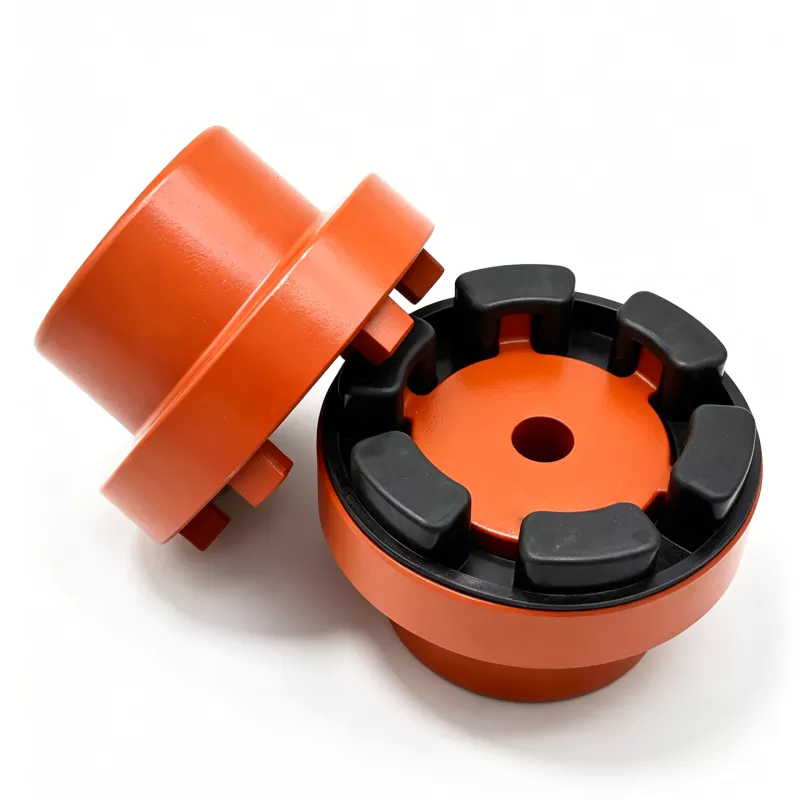
The controlled method
The safest useful answer is to build a record before making a choice. Identify the exact machine, calculate or obtain design torque, confirm actual rpm, measure both shafts, state starts and load changes, describe temperature and contaminants, then compare the documented NM range. Keep configuration requests such as keyways, alternative materials, hardness and balancing separate until the supplier confirms them.
For this topic, the practical action is to compare geometry, elastomer format, bore availability, torque basis, replacement-part identity and mounting envelope; never assume interchangeability from nominal size. The flexible ring can cushion disturbances, but it cannot repair a soft foot, bent shaft, loose base, bearing defect or process instability. If symptoms continue after replacement, stop treating the ring as the only cause and investigate the entire drive train.
Supplied NM catalogue data
| Size | Nominal torque N·m | Limited rpm | Max shaft Ø mm | D mm | L mm | S mm |
|---|---|---|---|---|---|---|
| NM50 | 5 | 3000 | 19 | 50 | 25 | 2.0 ± 0.5 |
| NM67 | 13 | 3000 | 28 | 67 | 30 | 2.5 ± 0.5 |
| NM82 | 28 | 3000 | 32 | 82 | 40 | 3.0 ± 1.0 |
| NM97 | 45 | 3000 | 42 | 97 | 50 | 3.0 ± 1.0 |
| NM112 | 70 | 3000 | 48 | 112 | 60 | 3.5 ± 1.0 |
| NM128 | 140 | 3000 | 55 | 128 | 70 | 3.5 ± 1.0 |
| NM148 | 280 | 3000 | 65 | 148 | 80 | 3.5 ± 1.0 |
| NM168 | 500 | 3000 | 75 | 168 | 90 | 3.5 ± 1.5 |
| NM194 | 840 | 1500 | 85 | 194 | 100 | 3.5 ± 1.5 |
| NM214 | 1000 | 1500 | 95 | 214 | 110 | 4.0 ± 2.0 |
These values are the user's catalogue evidence. Published web catalogues show different ratings for similarly named ranges; do not mix them.
Seven checks before action
- Isolate the machine.Apply the site's lockout and stored-energy procedure before inspection or measurement.
- Identify the coupling.Record markings, outside diameter, hub length, bore pair and ring geometry.
- Confirm the duty.Collect power, speed, machine type, starts, reversals, peak load and operating environment.
- Check geometry.Compare bores, keys, engagement, D, D1, L and S with the machine.
- Measure alignment.Correct foundation or piping effects before relying on coupling flexibility.
- Confirm the order.Obtain written agreement for every bore, keyway, material, coating and document.
- Record the result.Store drawing, quotation, readings and replacement identity for the next maintenance event.
Do not translate a name into interchangeability
“NM coupling,” “jaw coupling,” “L coupling,” and “ROTEX-style coupling” describe related buying categories but not a guaranteed common geometry. Ring shape, jaw count, hub length, torque basis, speed limit and elastomer system can differ. A correct replacement comparison checks the complete drawing and element identity.
The supplied NM design uses a four-lobe NBR ring. The user's requested 92 Shore A, 98 Shore A and 64 Shore D colour system is documented by KTR for its T-PUR products, not by the supplied NM page. It is included on this site only as a contrast in the materials guide and an option requiring written confirmation.
Guide questions
Is this guide a substitute for the machine manual?
No. Follow the machine maker, coupling drawing, risk assessment and local safety rules. This page organizes RFQ and maintenance questions.
Can I use competitor ratings for EVER-POWER selection?
No. Competitor information is context only. Product facts and ratings on this site come from the supplied EVER-POWER catalogue.
What should remain in the maintenance record?
Keep size, bore pair, element identity, gap, alignment readings, observed condition, date and corrective actions.
When is engineering review required?
Use engineering review for shock, pulsation, speed variation, critical machines, uncertain fit, chemical exposure or any duty near a catalogue boundary.