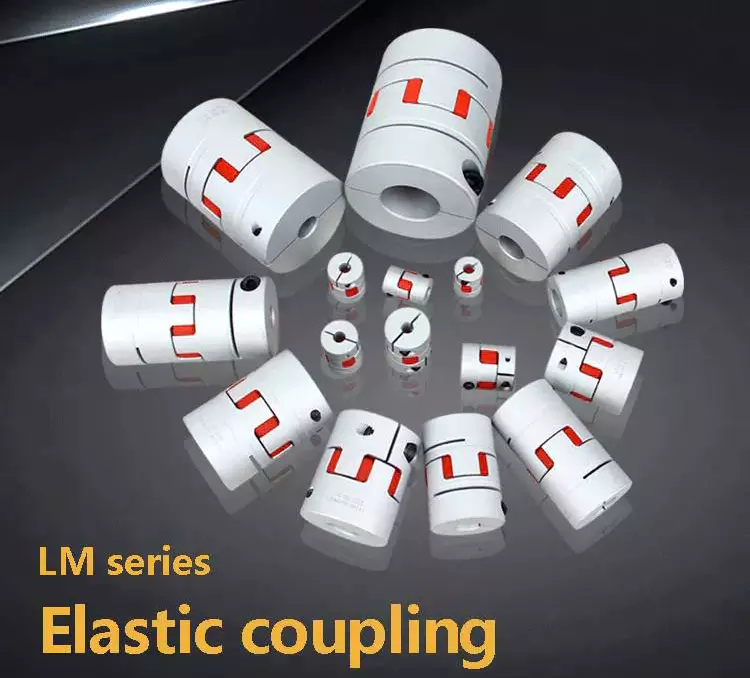
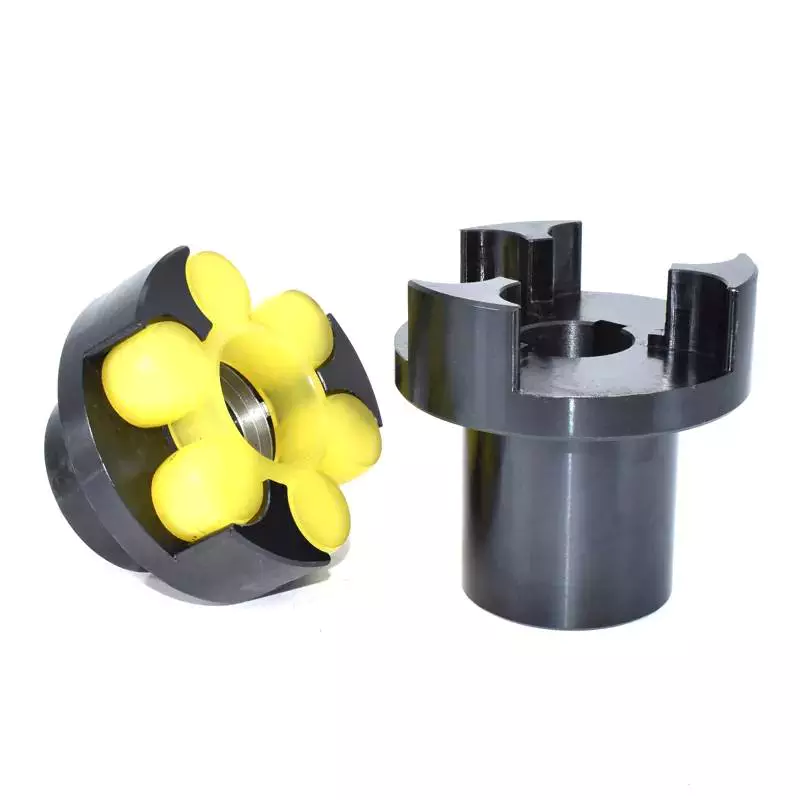
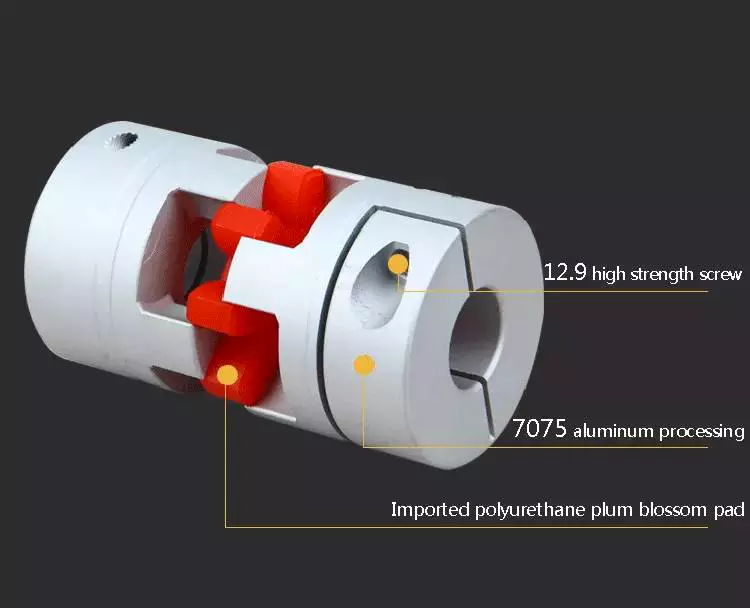
Solution Description
HGTQ Collection Application:
HGTQ collection large-elastic coupling is a kind of torsion sort higher-elastic coupling. It is suited for other medium and high-powered gearboxes developed by our business, and is also suitable for other energy transmissions largely driven by diesel engines and motors. . The composition mainly contains a vibration damping ring assembly, an elastic plate and a major and driven end connecting member, which can effectively compensate radial, angular and axial displacement of adjacent equipment, take up vibration, decrease resonance velocity, and therefore enhance shafting torsion. Features to lengthen tools maintenance intervals and services lifestyle.
This series of high-elastic couplings has a rated torque selection of TKN30=5-31.5kNm for a whole of 9 measurement teams. Virtually 1 hundred HCT1100, HC1200, HC1250 and HCQ1400 have been matched just before the official generation. After nearly 5 years of trials, this sequence of substantial-elastic couplings is a new cost-effective product.
Items Introduction:
The Company’s higher elastic couplings digesting and absorbing German innovative technology were the end result of self-R&D together with HangZhou Research Institute of Marine Gearbox, getting acknowledged by CCS, ZY, BV, Ab muscles, RINA, NK and LR. The company has handed by way of ISO9001:2008 accreditation.
The Business has produced itself obtainable with best implies of inspections. It has R&Ded dynamic tester on high elastic coupling – a completely impartial mental right of our possess – the first 1 of this variety in China.
Noticing zero charge of service thanks to merchandise quality for 6 a long time in a row and obtaining typical use daily life of 7 to 8 a long time for effortless worn-out areas, the Company has been the best 1 in this line in China in conditions of ability and marketplace share.
The principle of provider: currently being devoted to making certain client satisfactions. The concept of management of sustaining standard establishments and advanced manufacturing and inspection equipment, being courageous for innovations and creating ongoing enhancements is crucial to guarantee top quality goods. A cordial welcome will be presented for go to and advice.
HGTQ composition introduction:
one. The elastic element is ring-formed, and the vent hole is organized in the center of the ring, which is advantageous to ventilation and warmth dissipation. The diaphragm element can attenuate the axial response pressure, and shield the main and auxiliary machines. The 2 connection modes generally utilised at the output stop are relevant. In distinct set up spaces and working situations, unique link approaches can also be created in accordance to consumer requirements. The solitary-row elastomer has minimal relative price, but the dynamic stiffness is relatively big, which is suitable for medium and higher-speed diesel engines.
High-elastic merchandise accepted by the world’s multinational classification societies
.
HGTQ Sequence items Suited for impartial rigid or elastic electricity transmission units mounted by the host,
Rated torque variety .8-31.5kN.m
ninety% of the adaptable installation of the “Progress” gentle gearbox
| To Be Negotiated | 1 Piece (Min. Order) |
###
| Standard Or Nonstandard: | Nonstandard |
|---|---|
| Shaft Hole: | 8-24 |
| Torque: | <10N.M |
| Bore Diameter: | 1-1.5mm |
| Speed: | 750-2500 R/Min |
| Structure: | Flexible |
###
| Customization: |
Available
|
|---|
| To Be Negotiated | 1 Piece (Min. Order) |
###
| Standard Or Nonstandard: | Nonstandard |
|---|---|
| Shaft Hole: | 8-24 |
| Torque: | <10N.M |
| Bore Diameter: | 1-1.5mm |
| Speed: | 750-2500 R/Min |
| Structure: | Flexible |
###
| Customization: |
Available
|
|---|
Types of Coupling
A coupling is a device used to join two shafts together and transmit power. Its primary function is to join rotating equipment and allows for some end movement and misalignment. This article discusses different types of coupling, including Magnetic coupling and Shaft coupling. This article also includes information on Overload safety mechanical coupling.
Flexible beam coupling
Flexible beam couplings are universal joints that can deal with shafts that are offset or at an angle. They consist of a tube with couplings at both ends and a thin, flexible helix in the middle. This makes them suitable for use in a variety of applications, from motion control in robotics to attaching encoders to shafts.
These couplings are made of one-piece materials and are often made of stainless steel or aluminium alloy. However, they can also be made of acetal or titanium. While titanium and acetal are less common materials, they are still suitable for high-torque applications. For more information about beam couplings, contact CZPT Components.
Flexible beam couplings come in a variety of types and sizes. W series couplings are good for general purpose applications and are relatively economical. Stainless steel versions have increased torque capacity and torsional stiffness. Flexible beam couplings made of aluminum are ideal for servo and reverse motion. They are also available with metric dimensions.
Flexible beam couplings are made of aluminum alloy or stainless steel. Their patented slot pattern provides low bearing load and high torsional rigidity. They have a long operational life. They also require zero maintenance and can handle angular offset. Their advantages outweigh the disadvantages of traditional beam couplings.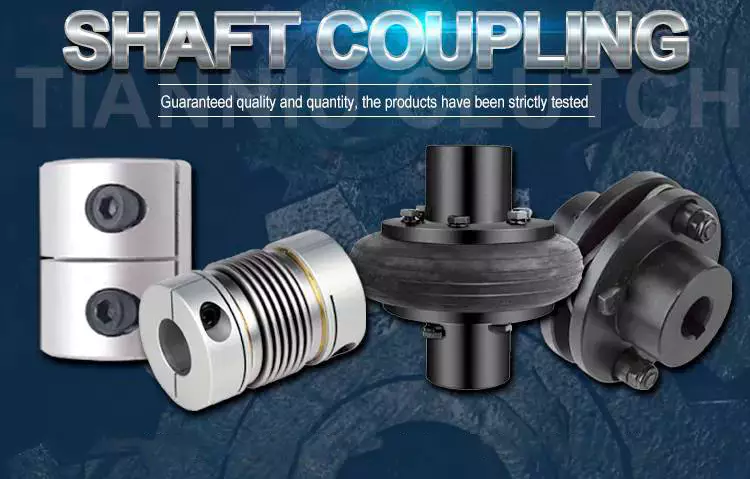
Magnetic coupling
Magnetic coupling transfers torque from one shaft to another using a magnetic field. These couplings can be used on various types of machinery. These types of transmissions are very useful in many situations, especially when you need to move large amounts of weight. The magnetic field is also very effective at reducing friction between the two shafts, which can be extremely helpful if you’re moving heavy items or machinery.
Different magnetic couplings can transmit forces either linearly or rotated. Different magnetic couplings have different topologies and can be made to transmit force in various geometric configurations. Some of these types of couplings are based on different types of materials. For example, a ceramic magnetic material can be used for applications requiring high temperature resistance.
Hybrid couplings are also available. They have a hybrid design, which allows them to operate in either an asynchronous or synchronous mode. Hysterloy is an alloy that is easily magnetized and is used in synchronous couplings. A synchronous magnetic coupling produces a coupled magnetic circuit.
Magnetic coupling is a key factor in many physical processes. In a crystal, molecules exhibit different magnetic properties, depending on their atomic configuration. Consequently, different configurations produce different amounts of magnetic coupling. The type of magnetic coupling a molecule exhibits depends on the exchange parameter Kij. This exchange parameter is calculated by using quantum chemical methods.
Magnetic couplings are most commonly used in fluid transfer pump applications, where the drive shaft is hermetically separated from the fluid. Magnetic couplings also help prevent the transmission of vibration and axial or radial loads through the drive shaft. Moreover, they don’t require external power sources, since they use permanent magnets.
Shaft coupling
A shaft coupling is a mechanical device that connects two shafts. The coupling is designed to transmit full power from one shaft to the other, while keeping the shafts in perfect alignment. It should also reduce transmission of shock loads. Ideally, the coupling should be easy to connect and maintain alignment. It should also be free of projecting parts.
The shaft couplings that are used in machines are typically made of two types: universal coupling and CZPT coupling. CZPT couplings are designed to correct for lateral misalignment and are composed of two flanges with tongues and slots. They are usually fitted with pins. The T1 tongue is fitted into flange A, while the T2 tongue fits into flange B.
Another type of shaft coupling is known as a “sliced” coupling. This type of coupling compensates for inevitable shaft misalignments and provides high torque. Machined slits in the coupling’s outer shell help it achieve high torsional stiffness and excellent flexibility. The design allows for varying engagement angles, making it ideal for many different applications.
A shaft coupling is an important component of any machine. Proper alignment of the two shafts is vital to avoid machine breakdowns. If the shafts are misaligned, extra force can be placed on other parts of the machine, causing vibration, noise, and damage to the components. A good coupling should be easy to connect and should ensure precise alignment of the shaft. Ideally, it should also have no projecting parts.
Shaft couplings are designed to tolerate a certain amount of backlash, but it must be within a system’s threshold. Any angular movement of the shaft beyond this angle is considered excessive backlash. Excessive backlash results in excessive wear, stress, and breakage, and may also cause inaccurate alignment readings. It is therefore imperative to reduce backlash before the shaft alignment process.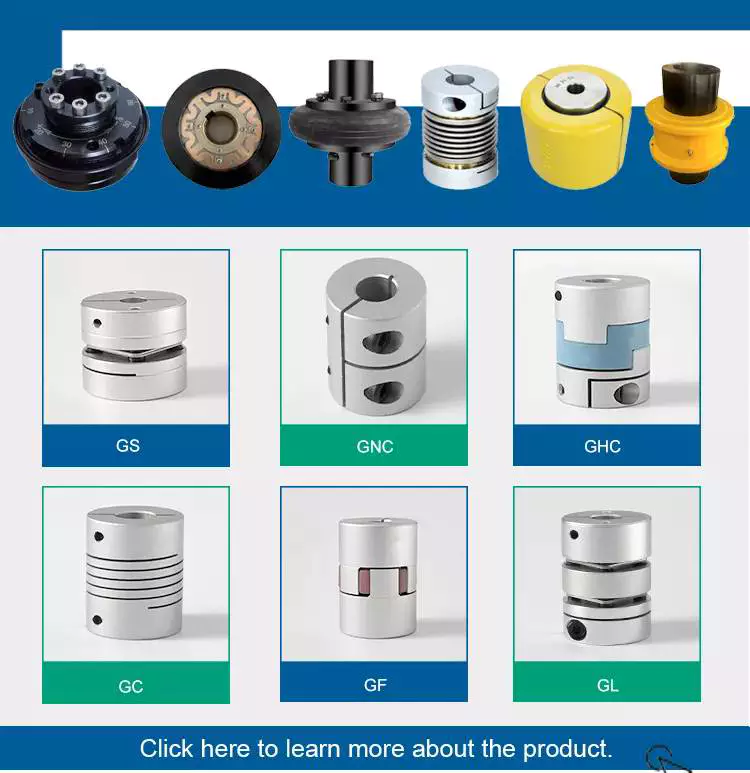
Overload safety mechanical coupling
Overload safety mechanical couplings are devices that automatically disengage when the torque applied to them exceeds a specified limit. They are an efficient way to protect machinery and reduce the downtime associated with repairing damaged machinery. The advantage of overload couplings is their fast reaction time and ease of installation.
Overload safety mechanical couplings can be used in a wide range of applications. Their automatic coupling mechanisms can be used on any face or edge. In addition, they can be genderless, incorporating both male and female coupling features into a single mechanism. This means that they are both safe and gender-neutral.
Overload safety couplings protect rotating power transmission components from overloads. Overload protection devices are installed on electric motors to cut off power if the current exceeds a certain limit. Likewise, fluid couplings in conveyors are equipped with melting plug elements that allow the fluid to escape when the system becomes too hot. Mechanical force transmission devices, such as shear bolts, are designed with overload protection in mind.
A common design of an overload safety mechanical coupling consists of two or more arms and hubs separated by a plastic spider. Each coupling body has a set torque threshold. Exceeding this threshold may damage the spider or damage the jaws. In addition, the spider tends to dampen vibration and absorb axial extension. This coupling style is nearly backlash free, electrically isolating, and can tolerate very little parallel misalignment.
A mechanical coupling may also be a universal joint or jaw-clutch coupling. Its basic function is to connect the driver and driven shafts, and limits torque transfer. These devices are typically used in heavy-duty industries, such as steel plants and rolling mills. They also work well with industrial conveyor systems.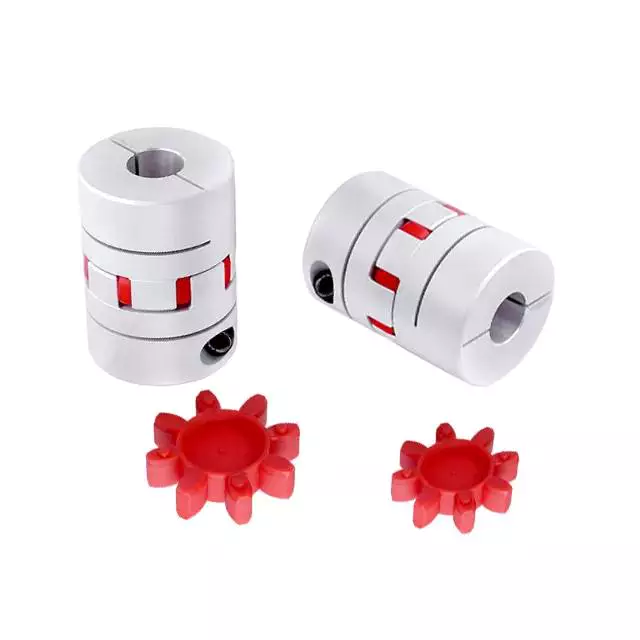
CZPT Pulley
The CZPT Pulley coupling family offers a comprehensive range of couplings for motors of all types. Not only does this range include standard motor couplings, but also servo couplings, which require ultra-precise control. CZPT Pulley couplings are also suitable for engine applications where high shocks and vibrations are encountered.
CZPT Pulley couplings have a “sliced” body structure, which allows for excellent torsional stiffness and strength. They are corrosion-resistant and can withstand high rotational speeds. The couplings’ design also ensures accurate shaft rotation while limiting shaft misalignment.
CZPT Pulley has introduced the CPU Pin Type couplings, which are effective at damping vibration and maintain zero backlash. They are also made from aluminum and are capable of absorbing heat. They come with recessed tightening screws. They can handle speeds up to 4,000 RPM, and are RoHS-compliant.

editor by czh 2022-12-01